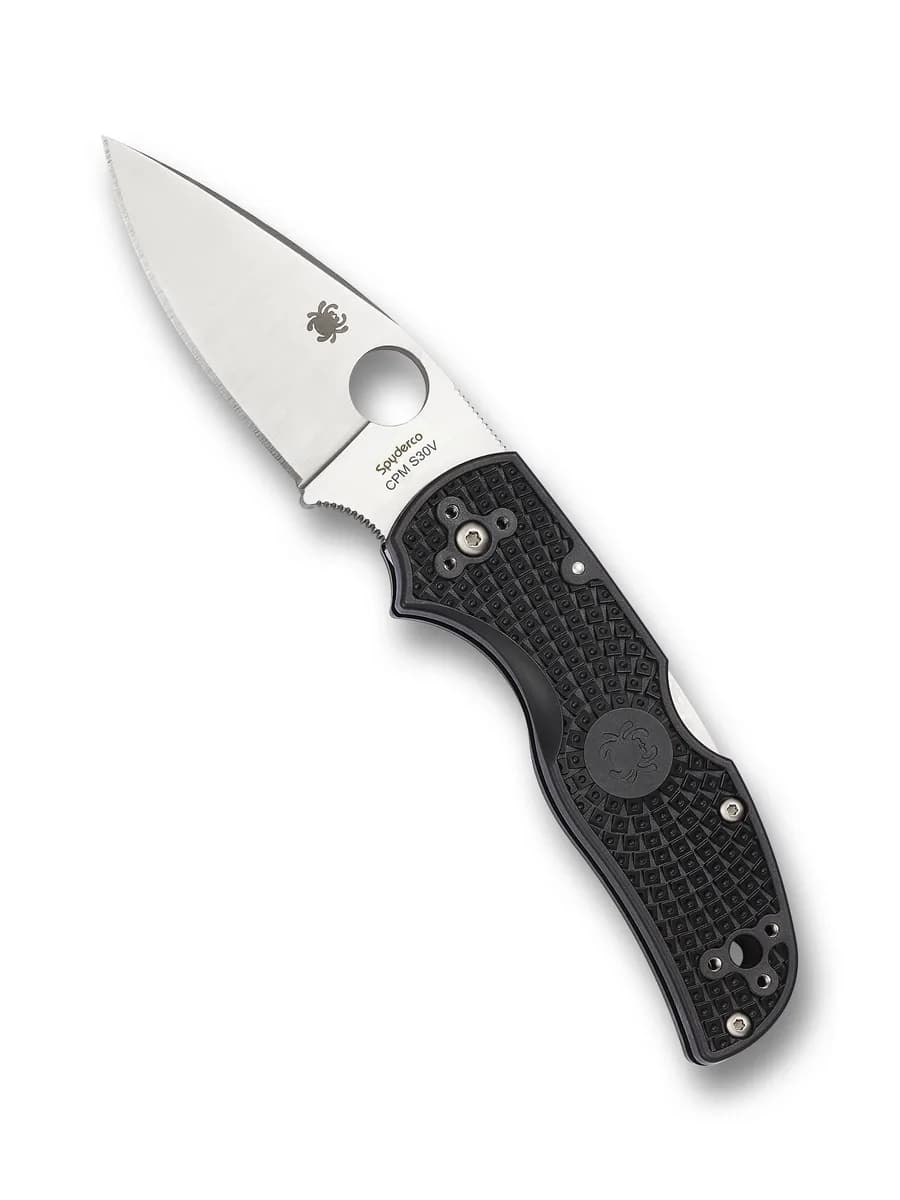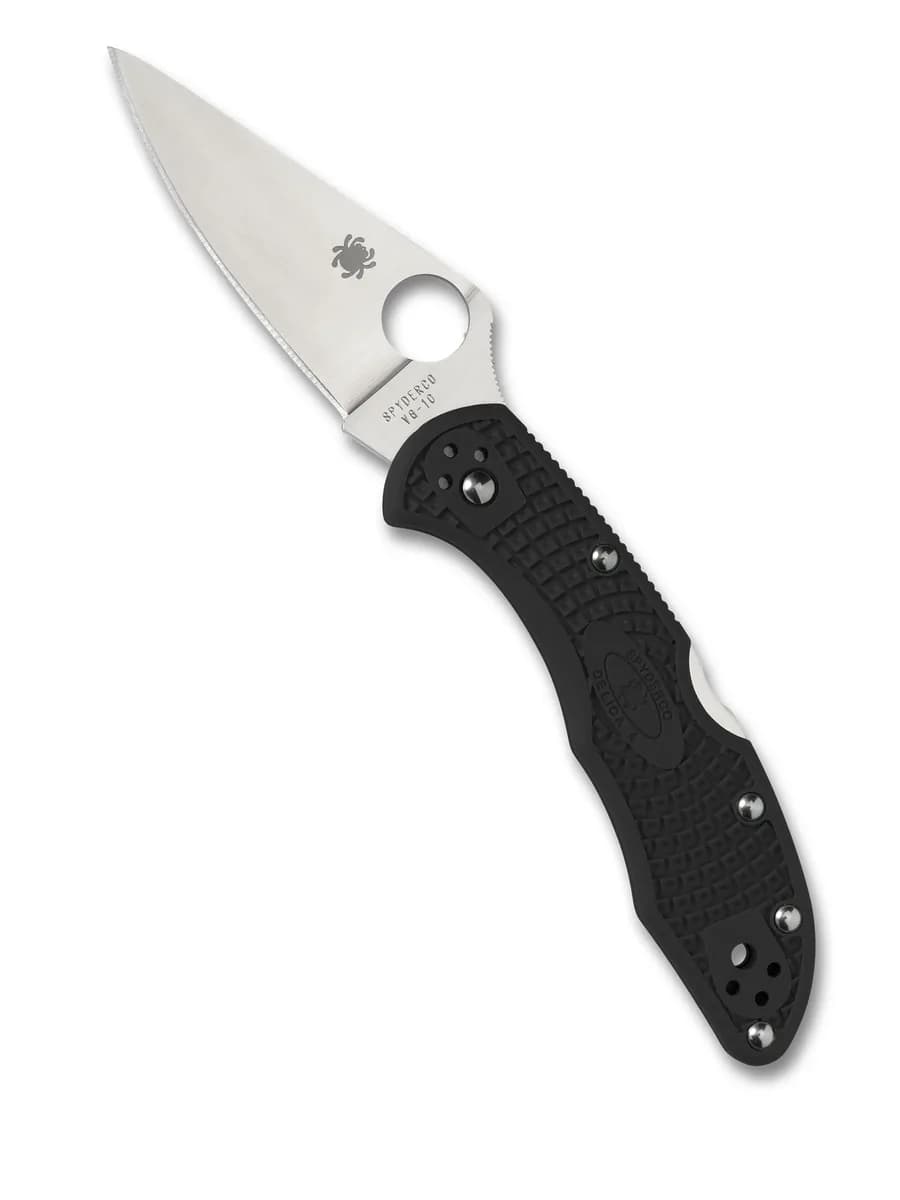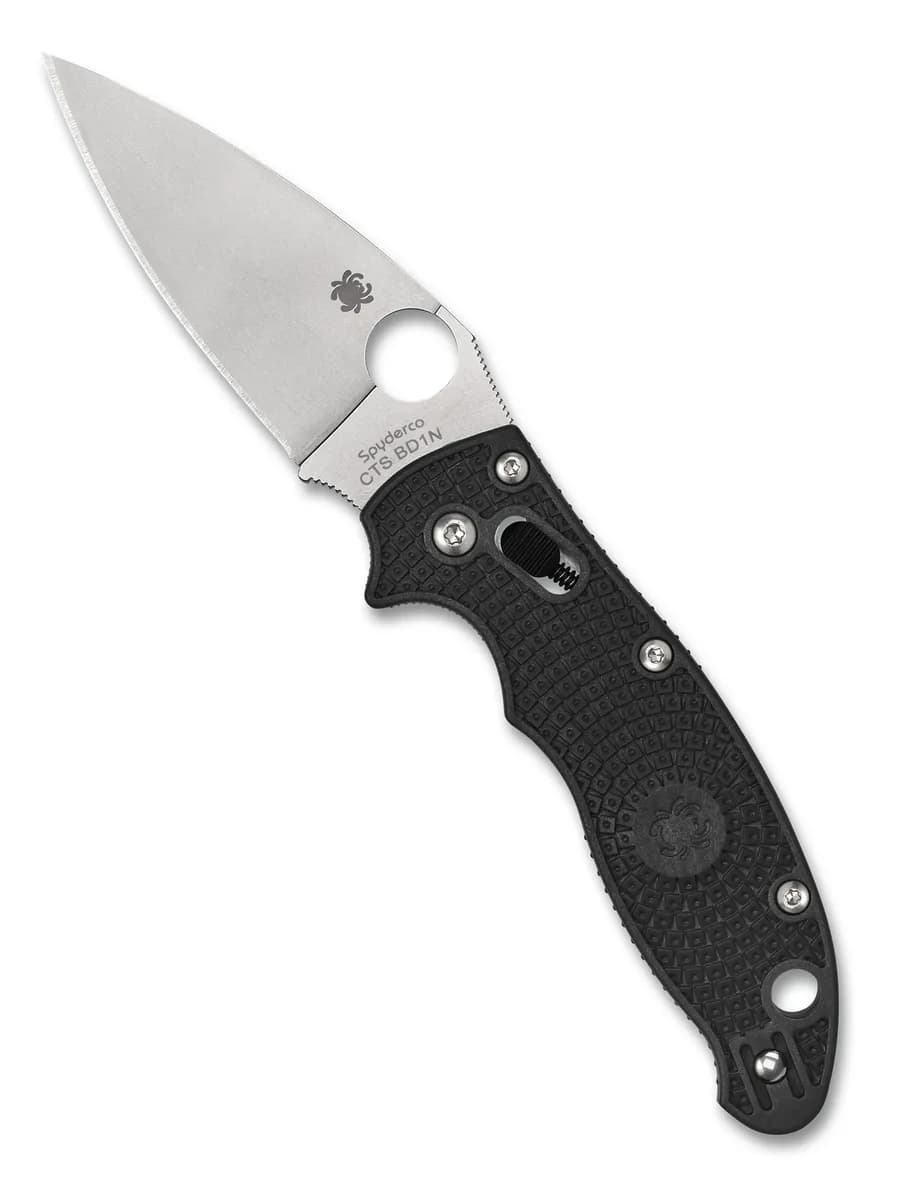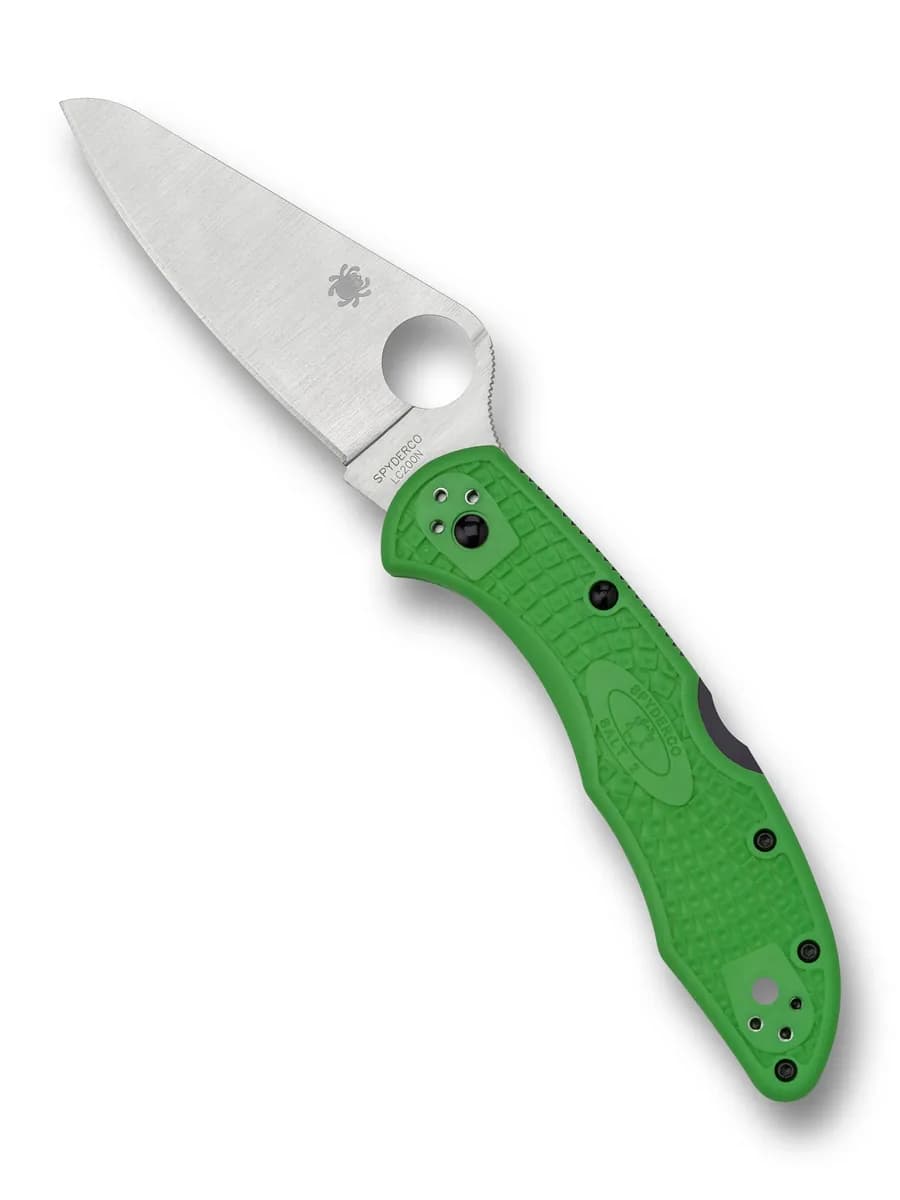
- Spyderco Salt 2 · Drop Point3″ blade · 0.098″ spine · 1.9 oz · ~1.27″ tall
Spyderco Salt 2
The Spyderco Salt 2 is a 3" drop point folder in LC200N, full flat ground. The handle is FRN, secured by a back lock. Made in Japan, one of 4 here from there.
- Blade
- 3″
- Weight
- 1.9 oz
- Steel
- LC200N
- Price band
- Premium
Everyday carry and general utility
We don’t have a verified retailer link for this knife yet. We only link products we have confirmed resolve to the right item — here’s why.
Specifications
Manufacturer-published figures, cross-checked against knifeworks, dlttrading.
- Spine thickness
- 0.098″
- Blade shape
- Drop Point
- Grind
- Full Flat
- Steel
- LC200N
- Overall length
- 7.2″
- Closed length
- 4.25″
- Weight
- 1.9 oz
- Lock
- Back Lock
- Deployment
- Manual
- Country of origin
- Japan
Why a drop point
The default hunting and EDC shape, and the safest general answer. The spine curves down to the tip in a convex line, which keeps the point low and strong and leaves plenty of belly for skinning. It is hard to make a drop point bad at anything.
Every drop point here →About LC200N
Nitrogen steel that is effectively rustproof — the reason it shows up on saltwater and dive knives. Trades edge retention for that immunity.
1-5 is a relative ranking drawn from published composition and hardness, not a lab measurement. Higher is better on every axis, and no steel is a 5 across the board — edge retention and toughness pull against each other. All LC200N knives
What owners say
Drawn from 139 owner discussions of the Spyderco Salt 2 since 2024. The opinions are theirs. The specifications above come from the maker.
What owners like
- LC200N shrugs off sweat: one owner who carries their LC200N Salt 2 while out sweating in Georgia reports not a spot of rust after two years and says it holds a good edge.
- Water is where owners use it: one owner, who does not name their steel, says their Salt 2 has been in the Pacific, Atlantic, Gulf and many lakes without a speck of rust; another kept theirs as an everyday knife for three to four years as one of only two knives they trust to get wet; and an LC200N Wharncliffe owner saw only tiny marks after wet ice melt dried on it for over a week.
- At 1.9 oz with nylon scales and no liners it nearly disappears: one owner calls it ridiculously light, another super slim, and one carries it in their wallet without noticing it.
- The Delica-pattern handle earns real loyalty: one owner of hundreds of knives calls their LC200N Salt 2 their favourite for its ergonomics and slim profile, another calls it their most carried knife ever, and a first-time Spyderco buyer says the ergonomics explained the hype.
- Bright FRN is practical: one owner says it is easy to find if dropped, and another bought one for the high-visibility green even though they did not need the corrosion resistance.
- It became one family's fishing knife: one owner, their brother and their nephew all carry versions of the Salt 2 for fishing, and two other owners take it backpacking and hiking.
- Prices stay reasonable: one buyer paid $78 for an LC200N Salt 2 in 2025, and another paid $85 at the factory outlet the same year.
What owners flag
- It is corrosion resistant, not corrosion proof: one diver's LC200N Salt 2 wharncliffe rusted at the laser engravings after a handful of dives, and they note engraving can weaken a stainless steel's resistance.
- Hardware can corrode in hard marine use on other steel versions: one owner of an H2 Salt 2 found the action turning gritty after a year of ocean water and sweat, with the pivot screw threads oxidizing, and one owner who has taken what they think is an H1 Salt 2 to the beach and snorkeling for years says the action is a little gritty now, though without rust.
- Sharpening LC200N can frustrate: one owner could not get their LC200N Salt 2 Wharncliffe to take a satisfying edge in two attempts, though their LC200N Native 5 took a keen edge easily, and a three-to-four-year owner recommends it to people who do not mind sharpening now and then.
- The light FRN feels slippery or too light to some: one owner took a Dremel to their scales for grip because they were slippery, and another wants G10 scales because the FRN feels too light for their taste.
- The back lock needs breaking in: one owner says the break-in period takes a while even with lube on the pivot, and another says it will flick but is no flicker and sometimes jams their thumb.
- It is not a drop-in Delica: one owner who swapped parts found slight differences in the scales and hardware and could only exchange the blades and lockbacks.
Two years of Georgia sweat without a spot of rust is how one LC200N owner sums up the Salt 2. Owners carry it as a water and sweat knife for fishing, beaches, hiking and backpacking, and it is a 1.9 oz, 3 in Delica-pattern folder that one owner keeps in their wallet without noticing it. In one family, three members each carry a version of it as their fishing knife.
Ergonomics win praise even from one owner of hundreds of knives, and the bright FRN is easy to spot if dropped. The weak spots are corrosion at the edges of the claim, such as rust at laser engravings after dives on an LC200N Wharncliffe and oxidized pivot threads after a year of marine use on an H2 version, LC200N that one owner found hard to sharpen keen, a back lock that needs breaking in, and FRN that two owners find slippery or too light.
The Delica is the obvious comparison: owners call the Salt 2 a lightweight Delica with a slightly longer LC200N blade, and one Salt 2 sent its owner to buy a Delica. A diver who saw their LC200N rust at the engravings moved to a Native 5 Salt for diving, while another view is that H1 or H2 Salts are better for that use.
Is the Salt 2 just a Delica in LC200N?
Close. Owners describe it as a lightweight, linerless Delica with a slightly longer LC200N blade, and one says the handles share the same dimensions. One owner who tried swapping parts found small differences in scales and hardware, so only the blades and lockbacks traded over.
Will LC200N rust?
Rarely in everyday use: one owner reports no rust after two years of carrying it while sweating, and another saw only the faintest surface rust after leaving wet ice melt on theirs for over a week. One diver did see rust at the laser engravings after a handful of dives.
Why is my Salt 2 getting gritty after time in salt water?
The clearest report is from an H2 Salt 2, not this LC200N version: after a year in a marine environment it turned gritty, and when the owner took it apart they found surface rust on the lock bar and oxidizing pivot screw threads. Cleaning it and replacing the screws and pillar was suggested, and so was contacting Spyderco.
Is LC200N hard to sharpen?
Experiences differ. One owner could not get a satisfying edge on their LC200N Salt 2 wharncliffe after two attempts, while their LC200N Native 5 sharpened easily. Another owner says their LC200N Salt 2 holds a good edge.
Features
- Back Lock
- Full Flat grind
- Under 2.5 oz
- Made in Japan
- Stainless blade