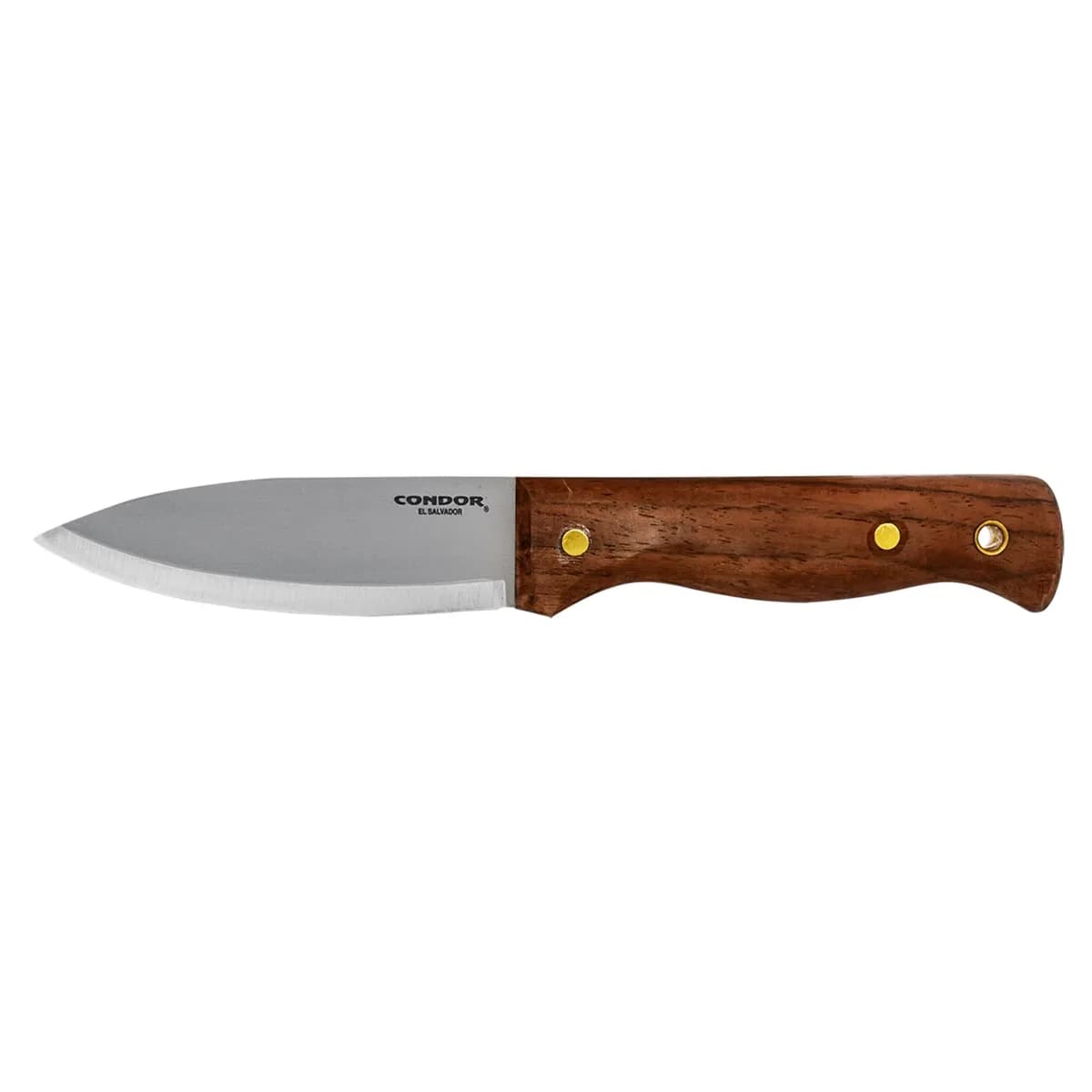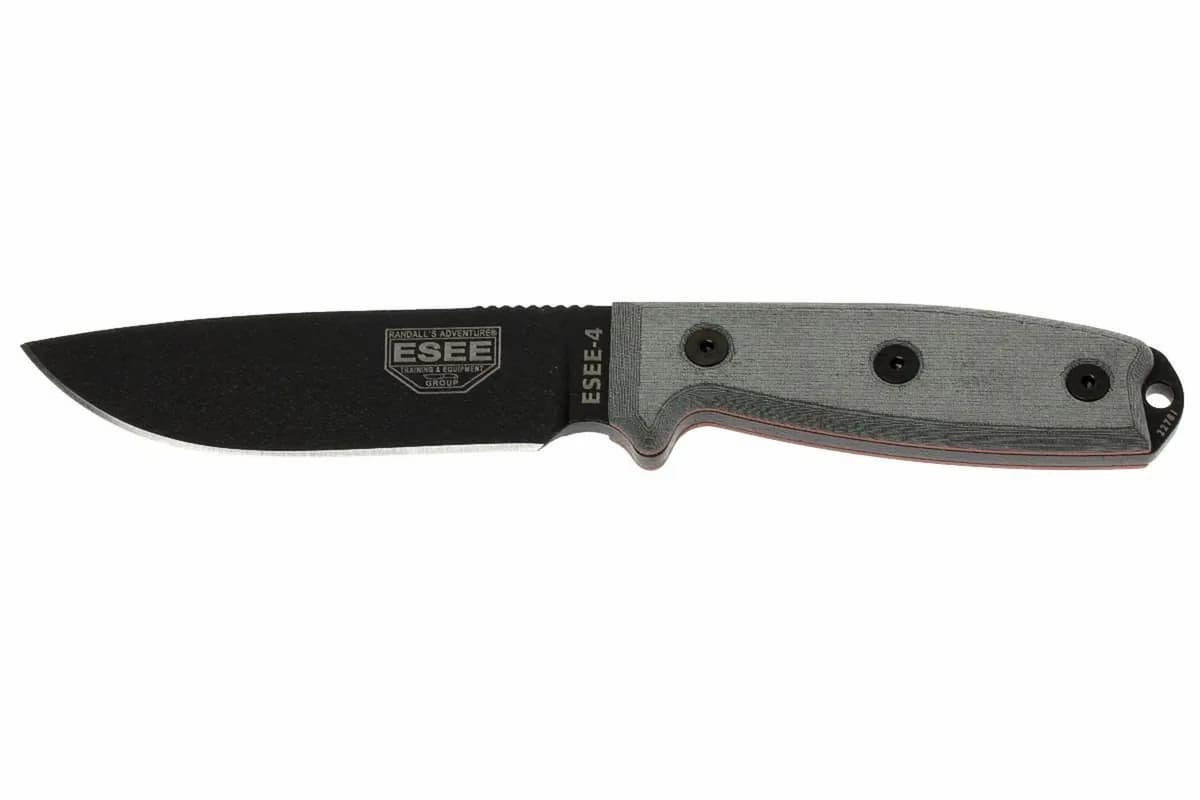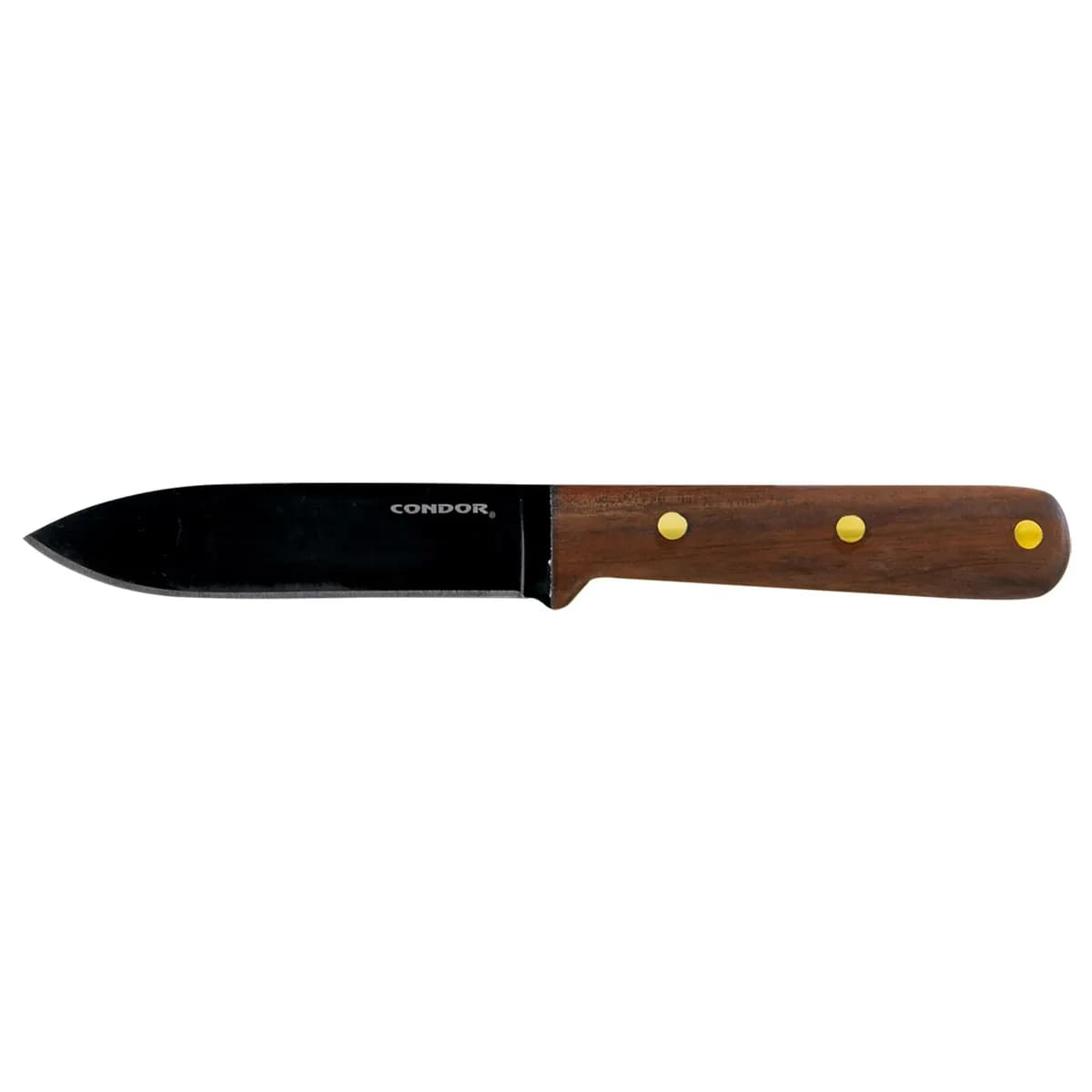
- Condor Kephart · Drop Point4.5″ blade · 0.12″ spine · ~1.03″ tall
Condor Kephart
Condor's take on the Kephart pattern -- the plain, thin-stock camp knife Horace Kephart specified in 1910 and the shape most bushcraft knives are still arguing with. Flat ground in 1075 at .12", which is thinner than the Bushlore and slices far better for it. Published weights disagree across retailers, so this entry leaves weight blank rather than pick one.
- Blade
- 4.5″
- Weight
- —
- Steel
- 1075 Carbon
- Price band
- Mid
Traditional bushcraft where slicing matters more than batoning
We may earn a commission. Price and availability on Amazon’s site may differ.
Specifications
Manufacturer-published figures, cross-checked against knifecenter.com.
- Blade length
- 4.5″
- Spine thickness
- 0.12″
- Blade shape
- Drop Point
- Grind
- Flat
- Steel
- 1075 Carbon
- Lock
- Fixed
- Handle material
- Walnut
- Country of origin
- El Salvador
Why a drop point
The default hunting and EDC shape, and the safest general answer. The spine curves down to the tip in a convex line, which keeps the point low and strong and leaves plenty of belly for skinning. It is hard to make a drop point bad at anything.
Every drop point here →About 1075 Carbon
Lower carbon than 1095, so softer and even tougher. Common on machetes and budget bushcraft blades.
1-5 is a relative ranking drawn from published composition and hardness, not a lab measurement. Higher is better on every axis, and no steel is a 5 across the board — edge retention and toughness pull against each other. All 1075 Carbon knives
Features
- Full fixed tang
- Flat grind
- Made in El Salvador
- Carbon steel blade — will patina