- Spyderco Sage 5 Lightweight · Leaf3″ blade · 0.118″ spine · 2.9 oz · ~1.29″ tall
Spyderco Sage 5 Lightweight
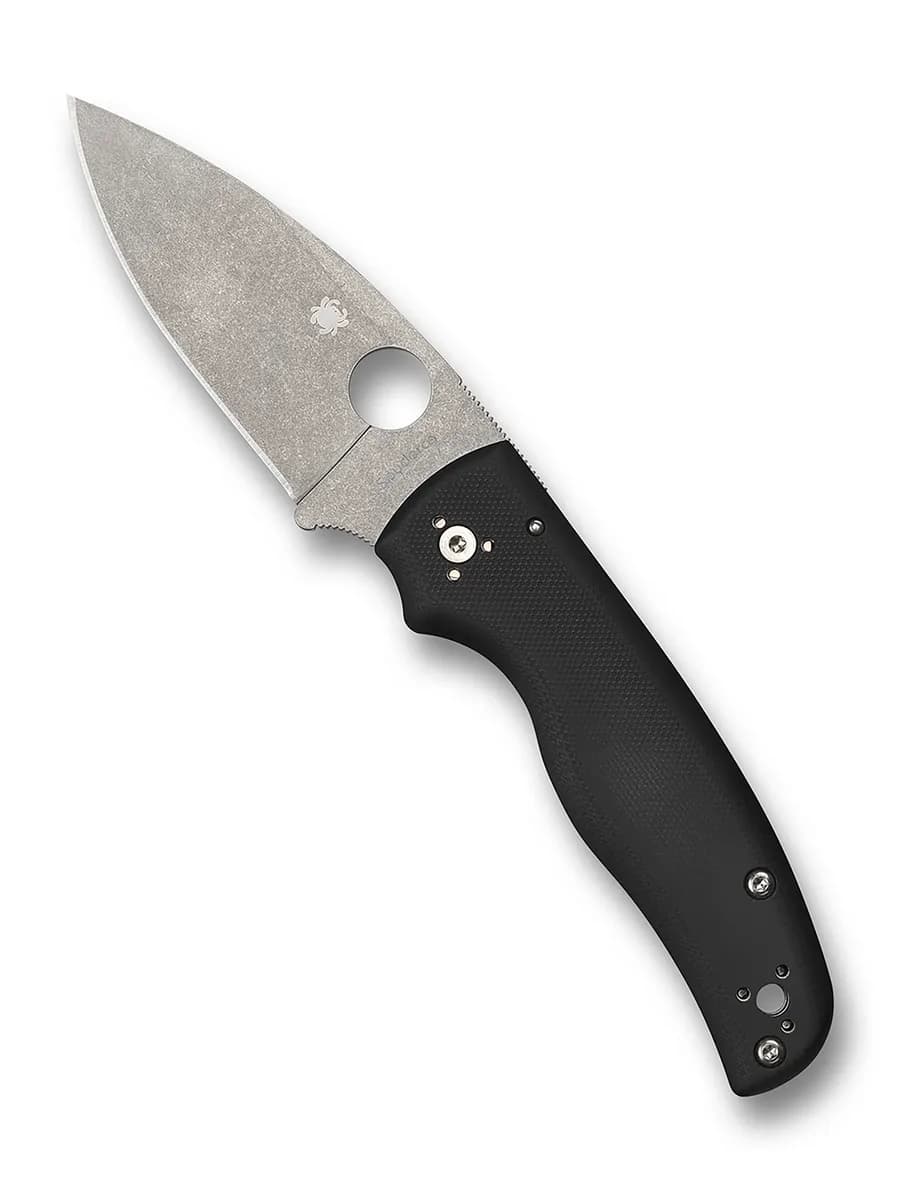
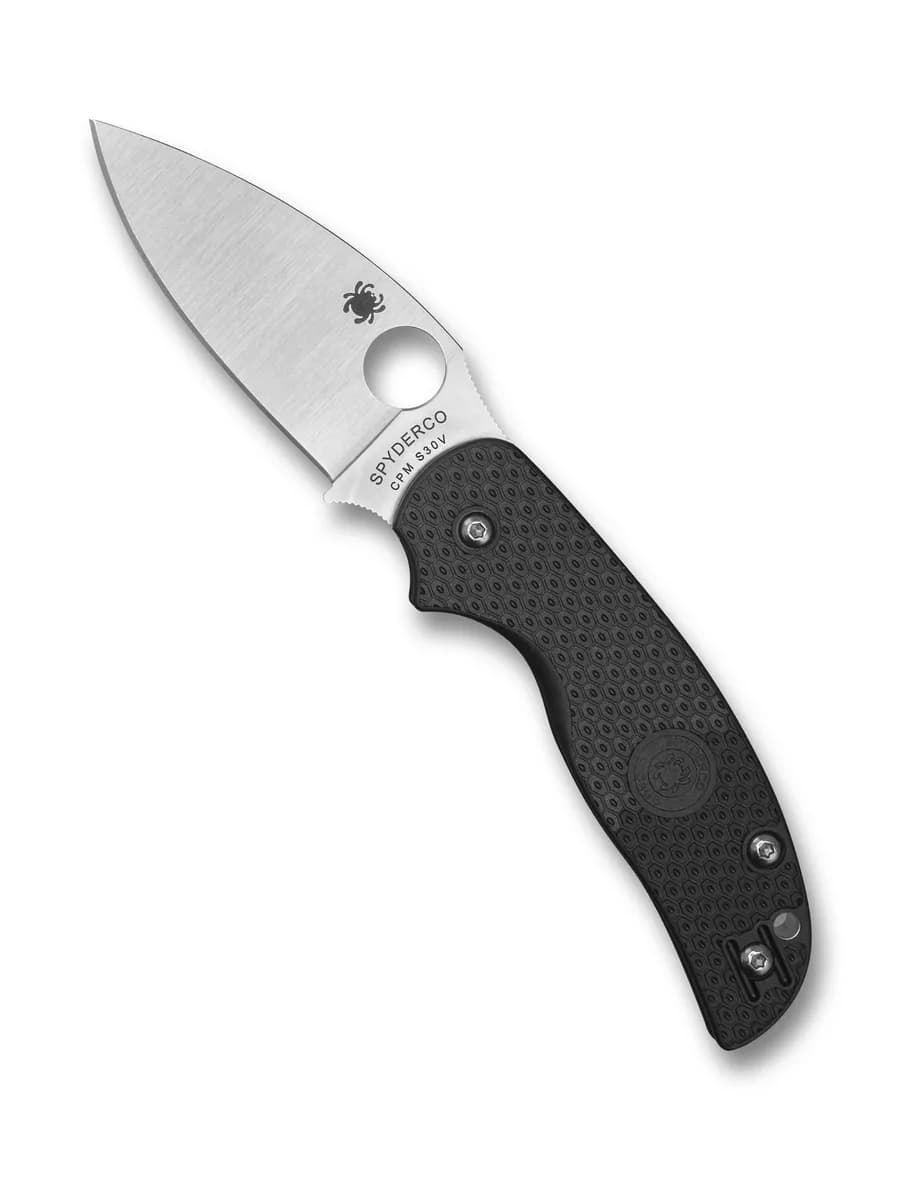
The Spyderco Sage 5 Lightweight is a 3" leaf folder in CPM-S30V, full flat ground. The handle is FRN, secured by a compression lock. One of only 3 leaf blades in the catalogue, out of 140.
- Blade
- 3″
- Weight
- 2.9 oz
- Steel
- CPM-S30V
- Price band
- Premium
Everyday carry and general utility
We may earn a commission. Price and availability on Amazon’s site may differ.
Specifications
Manufacturer-published figures, cross-checked against knifecenter, smkw.
- Cutting edge
- 2.63″
- Spine thickness
- 0.118″
- Blade shape
- Leaf
- Grind
- Full Flat
- Steel
- CPM-S30V
- Overall length
- 7.13″
- Closed length
- 4.17″
- Weight
- 2.9 oz
- Lock
- Compression
- Deployment
- Manual
- Country of origin
- Taiwan
Why a leaf
Spyderco's signature: belly on both the edge and the spine, meeting at a tip near the centreline. It gives a lot of cutting edge in a short blade, which is why it dominates short-blade EDC.
Every leaf here →About CPM-S30V
The long-time American benchmark. Holds an edge far longer than 420HC and still sharpens on ordinary stones. Chippy if you pry with it.
1-5 is a relative ranking drawn from published composition and hardness, not a lab measurement. Higher is better on every axis, and no steel is a 5 across the board — edge retention and toughness pull against each other. All CPM-S30V knives
What owners say
Drawn from 1,191 owner discussions of the Spyderco Sage 5 Lightweight since 2024. The opinions are theirs. The specifications above come from the maker.
What owners like
- Taichung fit and finish shows up out of the box: owners report dead-on centering, zero play, chamfered spine and hole edges and smooth action, and one credits the pivot bushing for the centering.
- The bushing pivot can be cranked fully down with no play: one owner who has had more than a dozen Para 3s says none ever matched a tuned Sage on centering and play.
- Steel liners under the FRN give it heft: one owner says the liners make it feel far more substantial than their other lightweight Salts, and another liked the stock FRN setup because it keeps the same internals and steel liners.
- The size sits in the middle: one owner with big hands finds the handle a little bigger than a Native 5 without being a pocket hog like the Manix, and another calls it a middle ground between the Para 3 and Manix 2.
- Several owners say it took the Para 3's place in the pocket, and one who has owned both says the Para 3 never appealed to them even after a scale swap.
- The compression lock is easy to release, and two left-handed owners say they like it, one preferring it to frame locks.
- Aftermarket scales are plentiful; one owner says contoured titanium scales improved the grip and buried the blade tip deeper, and a scale maker remade one buyer's mismatched set free of charge.
- The S30V model can be found below list: one buyer paid $127 on Amazon in 2026 from a seller they understood to be an official dealer, about $50 under most other places, and it arrived in good order.
What owners flag
- The closed blade tip sits very close to the scale edge on some LW knives: one owner measured 1.6 mm to flush on a new SPY27 knife, one Salt owner considered returning theirs over it and another's tip is barely hidden, and one owner says a few sharpenings put the tip above the scales.
- Taking it apart can ruin a good action: several owners who cleaned or adjusted a knife that had worked perfectly ended up with stiff, gummy or sluggish action, blade play or off-centre blades they could not tune out.
- Small parts are easy to lose; one owner lost the pivot bushing during cleaning and could not find a size to replace it.
- A floating stop pin means one owner's closed knife rattles slightly when shaken, which they call a tiny nitpick.
- Aftermarket parts do not always fit: one set of scales modelled on the G10 Sage 5 did not match the LW clip position, and on one owner's anodised aluminium scales the lanyard fitting did not fit.
- Stock FRN and the wire clip are a reason to mod for some; one owner disliked the rough factory FRN, and another was not in love with the wire clip.
- Left-handers are not unanimous: one fan of the Salt version warns the standard compression lock is not lefty-friendly, and a left-handed buyer weighed the button-lock Sage 6 for that reason.
- Not everyone is won over; one fan who rates the Sage 5 highly still prefers the Para 3 and cannot say why, and another owner says the LW is not really lightweight.
More than a dozen Para 3s passed through one owner's hands, and none gave the fully tightened, play-free pivot a tuned Sage 5 did. Owners carry the LW as a 3.0 in, 2.9 oz everyday knife; one describes it as the Native's handle, the Manix's blade and the PM2's lock built in Taichung, and one tradesman takes a SPY27 version to the jobsite most days. It also comes in other steels, such as SPY27, with S30V as the base model on this page.
New knives often arrive centred, smooth and with zero play, which one owner credits to the pivot bushing, and owners say the steel liners make it feel substantial. The weak points are the closed tip, which sits close to the scale edge on some knives and can stand proud after sharpening, and the action after a strip-down, which several owners struggled to restore. Scale swaps are common, from contoured titanium that buries the tip deeper to micarta, though not every set fits the LW.
Para 3 owners are its main converts: several moved the Sage into the Para 3's place, though one fan still prefers the Para 3. Next to the Native 5 one owner rates the Sage almost as good, and another finds its handle better for big hands. The button-lock Sage 6 now competes with it, and one owner says their Sage 6 has since overtaken their Sage 5.
Does the Sage 5 LW tip stick out of the handle?
On some knives it sits very close: one owner measured 1.6 mm short of flush on a new SPY27 knife, and two others noticed it on the Salt. One owner warns that a few sharpenings can put it above the scales. Thicker aftermarket scales bury the tip deeper, according to one owner who fitted titanium scales.
Sage 5 LW or Para 3?
Three owners who have had both describe keeping the Sage; one says the Para 3 never appealed to them even with new scales, another says the Sage pushed their Para 3 out of the pocket, and one who went through more than a dozen Para 3s could never tune one as well. One fan still prefers the Para 3 and cannot explain why.
Why did the action go bad after I cleaned it?
Several owners report it. Owners whose knives worked perfectly before report stiff, gummy or off-centre action after reassembly, and one fixed blade play only by refitting the washer, bushing and pivot together. Keep track of the bushing, which one owner lost during cleaning.
Is the compression lock usable left-handed?
Opinions differ. Two left-handed owners say they like it, and one finds it easy to release, while one fan of the Salt version calls the standard compression lock not lefty-friendly, and a left-handed buyer looked at the Sage 6 for its button lock.
Will aftermarket scales fit the LW?
Many do, but check that they are made for the LW. One buyer's scales were modelled on the G10 Sage 5, whose clip position differs slightly, and the maker remade them. Another owner found the lanyard fitting did not sit right in anodised aluminium scales.
Features
- Compression lock
- Full Flat grind
- Made in USA
- Stainless blade
Compare the Lightweight
Related knives
More from Spyderco →