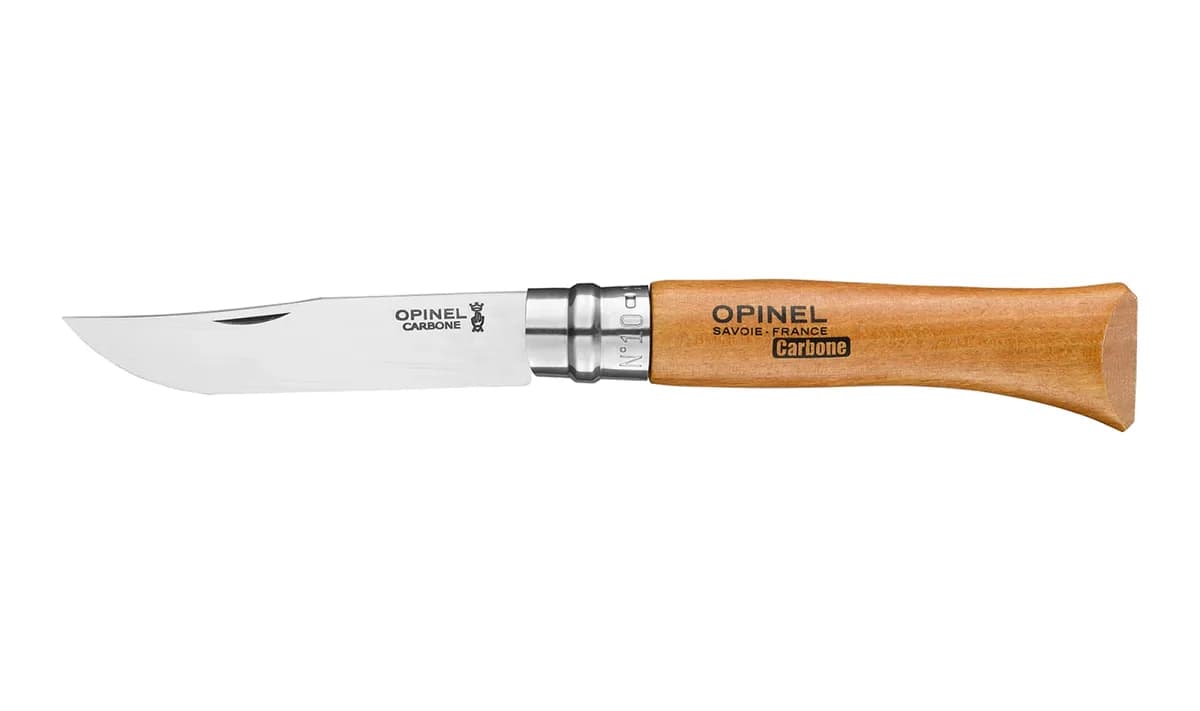
- Opinel No. 10 Carbone · Drop Point3.94″ blade · 0.08″ spine · 2.54 oz · ~1″ tall
Opinel No. 10 Carbone
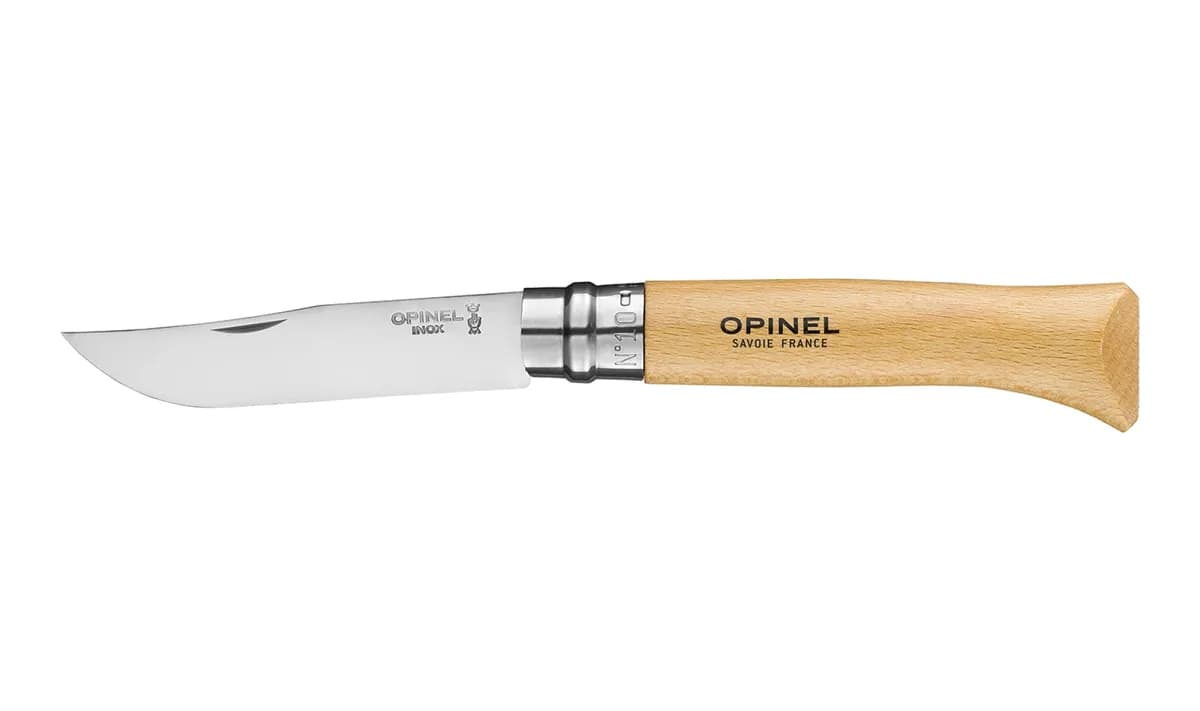
Physically the same knife as the stainless No. 10 — same beech handle, same Virobloc collar, same 3.94" blade — with XC90 carbon steel in place of Sandvik 12C27. It takes a keener edge off a simple stone and costs less, and it will stain the first time you cut fruit with it. That patina is protective once it forms, but this is the wrong choice if the knife will live in a damp pocket.
- Blade
- 3.94″
- Weight
- 2.54 oz
- Steel
- XC90 Carbon
- Price band
- Budget
Anyone who sharpens their own knives and does not mind a patina
We may earn a commission. Price and availability on Amazon’s site may differ.
Specifications
Manufacturer-published figures, cross-checked against opinel-usa.com.
- Blade length
- 3.94″
- Spine thickness
- 0.08″
- Blade shape
- Drop Point
- Grind
- Full Flat
- Steel
- XC90 Carbon
- Overall length
- 9.06″
- Closed length
- 5.31″
- Weight
- 2.54 oz
- Lock
- Virobloc Collar
- Deployment
- Manual
- Handle material
- Beechwood
- Country of origin
- France
Why a drop point
The default hunting and EDC shape, and the safest general answer. The spine curves down to the tip in a convex line, which keeps the point low and strong and leaves plenty of belly for skinning. It is hard to make a drop point bad at anything.
Every drop point here →About XC90 Carbon
Opinel's carbon steel. Almost pure iron and carbon, which is why it takes a screaming edge off a simple stone and why it stains the first time you cut an apple. That patina is protective once it forms. Cheaper and sharper than the stainless Opinel, and useless if you will not dry it.
1-5 is a relative ranking drawn from published composition and hardness, not a lab measurement. Higher is better on every axis, and no steel is a 5 across the board — edge retention and toughness pull against each other. All XC90 Carbon knives
What owners say
Drawn from 108 owner discussions of the Opinel No. 10 Carbone since 2024. The opinions are theirs. The specifications above come from the maker.
What owners like
- A freshly reprofiled No. 10 Carbone cut cleanly through heavy material for one owner: after a tyre blow-out on their truck trailer they sliced away a badly damaged mudguard in one smooth cut, impressing the tyre fitter.
- Carbon Opinels are easy to sharpen, a trait the whole carbon line shares: one owner of an older No. 7 Carbone calls its carbon steel easy to sharpen, another has kept their No. 8 Carbone sharp through a couple of weeks of light daily work, and another says the XC90 Carbone gets a great edge easily.
- Patina comes quickly on the carbon line: one No. 8 owner saw marks after a single morning slicing garlic, another found an Opinel Carbone took a mustard patina much faster than a Mora 511, and another builds it gradually by cutting apples and rinsing.
- Rust is manageable with light care, as on every carbon Opinel: one owner's No. 7 Carbone still looks fine after years of use with only a wash and wipe after juicy or dirty cuts, and another says none of theirs has rusted in a tool drawer full of other tools.
- The plain beech handle and blade invite modification: one No. 10 Carbone owner drilled a lanyard hole and added a clip and key rings, and another owner calls carbon Opinels cheap and fun to modify.
- Thin stock slices well and the wood handle stays comfortable: one owner notes Opinels do not get hot or cold in extreme weather, and a Benchmade owner compares the slicing of a Taggedout to a carbon Opinel at ten times the price.
What owners flag
- Neglected, the carbon steel rusts: one owner who found a carbon Opinel in a street gutter needed an overnight vinegar soak and sanding to clear it, and another owner warns XC90 will rust if not cared for and suggests a wipe of mineral oil now and then.
- Food can taste of it: one owner prefers stainless Opinels for food prep because an Opinel Carbone affects the flavor for them, even though they like the look of a forced patina on the Carbone.
- Factory edges disappoint some buyers: one owner of several No. 8 Carbones says every one arrived with a poor stock edge that took a long time to fix, and a No. 8 carbon owner asks how to sharpen it because they cannot get it back to its out-of-box sharpness.
- The steel is soft by modern standards: a hardness tester measured an Opinel Carbone (believed to be a No. 8) at 57.5 HRC, the lowest in their batch.
- The Virobloc lock can creep open: one Opinel fan warns that repeated cuts where the blade catches, such as making feather sticks, can walk the collar open, and another owner finds the collar slow to unlock.
- The wood handle reacts to water: one carbon Opinel found in a gutter was nearly impossible to open while swollen and too loose once dry, and another owner oiled their handle to prevent cracking and water ingress.
A single smooth cut through a damaged truck mudguard is the clearest report from a No. 10 Carbone owner, made just after they had sharpened and reprofiled the blade. Most owner discussion covers the carbon Opinel line as a whole, which shares this knife's XC90 steel, beech handle and Virobloc collar; the No. 10 carries a 3.94 in blade.
Patina is a big part of the appeal: owners force it with mustard or vinegar or let it build from apples, and one found it formed faster than on a Mora 511. The same steel rusts if ignored, measured 57.5 HRC in one tester's batch, and one owner gets an off taste in food from it. Factory edges get mixed reports, though several owners call the steel easy to sharpen.
Carbon or stainless is a recurring question from first-time buyers. One owner says stainless suits a low-maintenance carry since it will not rust, a No. 8 owner chose carbon for patina, easier sharpening and the traditional look, and a No. 9 or No. 10 gets suggested as a steak knife.
Should I buy the Carbone or the stainless version?
The answers come from owners of other sizes, but the steel choice is the same across the line. One recommends stainless for low-maintenance carry because it will not rust, while a No. 8 owner picked carbon for the patina, easier sharpening and the traditional look; one owner who preps food with their Opinels prefers stainless because the carbon version affects the taste for them.
How do I put a patina on an Opinel Carbone?
Owners force one with mustard or vinegar, and one gets a gradual patina by cutting apples, waiting an hour, then rinsing and drying. One owner found Opinel Carbone took a mustard patina much faster than a Mora 511.
Will the Carbone blade rust?
It can if neglected: one owner who found a carbon Opinel in a gutter needed an overnight vinegar soak to clear the rust. With light care it holds up: one owner's No. 7 Carbone still looks fine after years of use, and another owner suggests an occasional wipe of mineral oil.
How hard is Opinel's carbon steel?
One owner with a hardness tester measured an Opinel Carbone, which they thought was a No. 8, at 57.5 HRC, below every modern folder in the same batch. The trade-off owners mention is that the carbon steel is easy to sharpen.
Can the Opinel's locking collar fail?
One longtime fan warns that repeated cuts where the blade sticks in the material, such as carving feather sticks, can walk the collar open, so keep an eye on it during that kind of work. Another owner finds the collar slow to release.
Features
- Virobloc Collar lock
- Full Flat grind
- Made in France
- Carbon steel blade — will patina