- Opinel No. 10 · Drop Point3.94″ blade · 0.085″ spine · 2.54 oz · ~1.06″ tall
Opinel No. 10
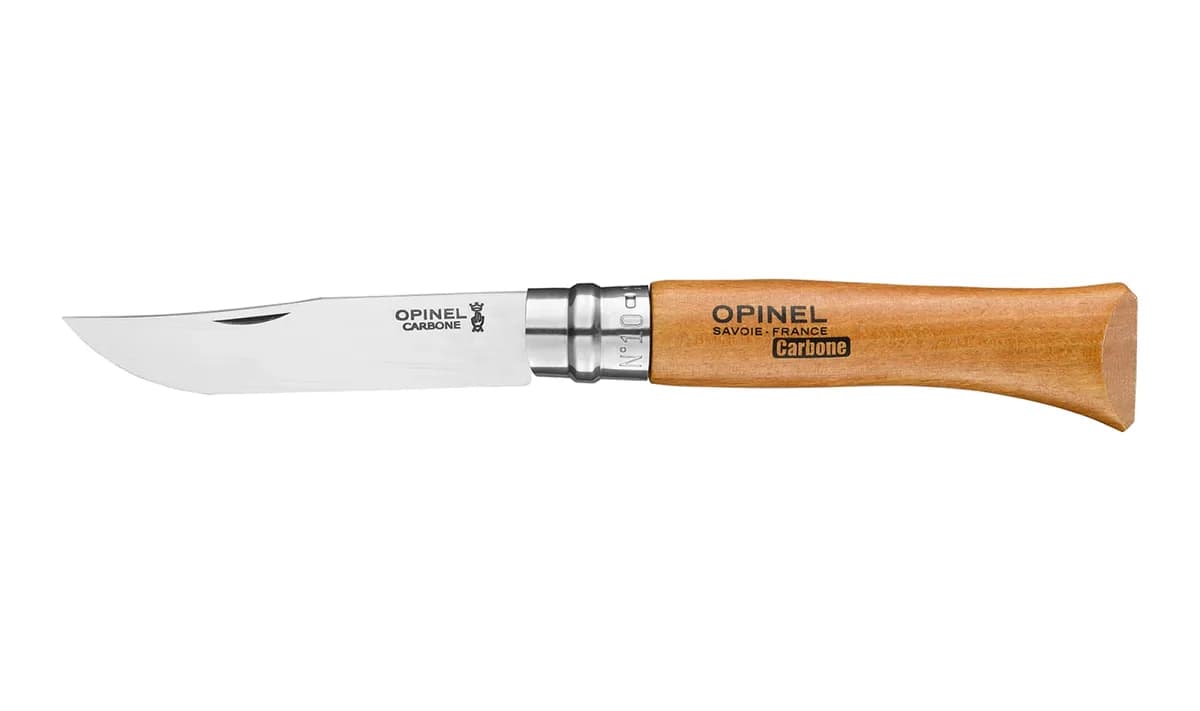
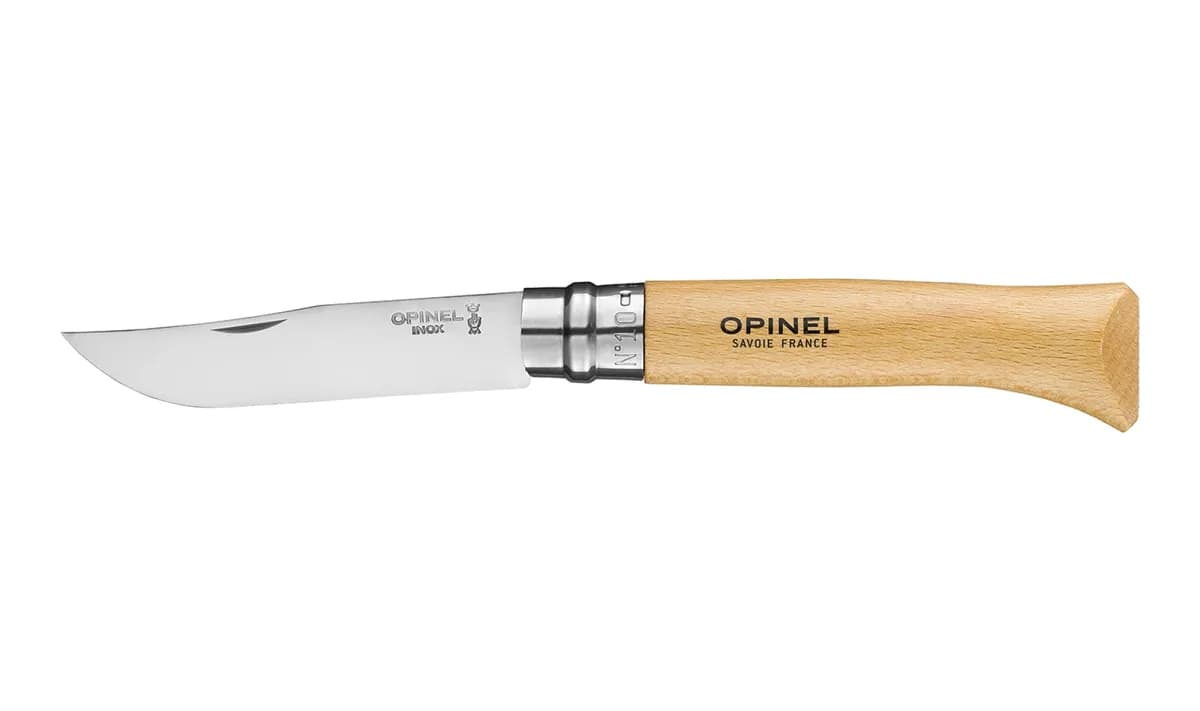
The Opinel No. 10 is a 3.94" drop point folder in Sandvik 12C27, full flat ground. The handle is Beechwood, secured by a virobloc collar lock. It is the longest-bladed of the 10 traditional pocket knives here, at 3.94".
- Blade
- 3.94″
- Weight
- 2.54 oz
- Steel
- Sandvik 12C27
- Price band
- Budget
Low-profile daily cutting where a tactical folder reads wrong
We don’t have a verified retailer link for this knife yet. We only link products we have confirmed resolve to the right item — here’s why.
Specifications
Manufacturer-published figures, cross-checked against opinel-usa.com, knifecenter.
- Blade length
- 3.94″
- Spine thickness
- 0.085″
- Blade shape
- Drop Point
- Grind
- Full Flat
- Steel
- Sandvik 12C27
- Overall length
- 9.06″
- Closed length
- 5.31″
- Weight
- 2.54 oz
- Lock
- Virobloc Collar
- Deployment
- Manual
- Handle material
- Beechwood
- Country of origin
- France
Why a drop point
The default hunting and EDC shape, and the safest general answer. The spine curves down to the tip in a convex line, which keeps the point low and strong and leaves plenty of belly for skinning. It is hard to make a drop point bad at anything.
Every drop point here →About Sandvik 12C27
Morakniv and Opinel's steel. Modest edge retention, excellent toughness and grain, sharpens on anything including a river rock.
1-5 is a relative ranking drawn from published composition and hardness, not a lab measurement. Higher is better on every axis, and no steel is a 5 across the board — edge retention and toughness pull against each other. All Sandvik 12C27 knives
What owners say
Drawn from 24 owner discussions of the Opinel No. 10 since 2024. The opinions are theirs. The specifications above come from the maker.
What owners like
- Camp cooking is where the 3.94 in blade earns its place: a bushcraft owner uses their No. 10 for cooking, eating and mushroom foraging, finding their Victorinox too small and their big puukko too big for cooking.
- People modify the No. 10: one maker fitted a clear epoxy resin handle and says it still opens, locks and slices like the original, another was customized with sambar stag scales, one owner shows theirs slightly modified and restored, a tree worker carries a modded one every day, and another ground one into a cleaver.
- Next to a traditional slipjoint it holds its own: one longtime Case owner says they are really fond of their first No. 10, and another knife user picks the Opinel over a Case Sodbuster, calling the No. 10 an especially good pick in the range.
What owners flag
- The beech handle swells with moisture: one owner's new No. 10 was impossible to open, and the advice is that oil only reduces water uptake and the joint may need working, with pliers if necessary, the first few times.
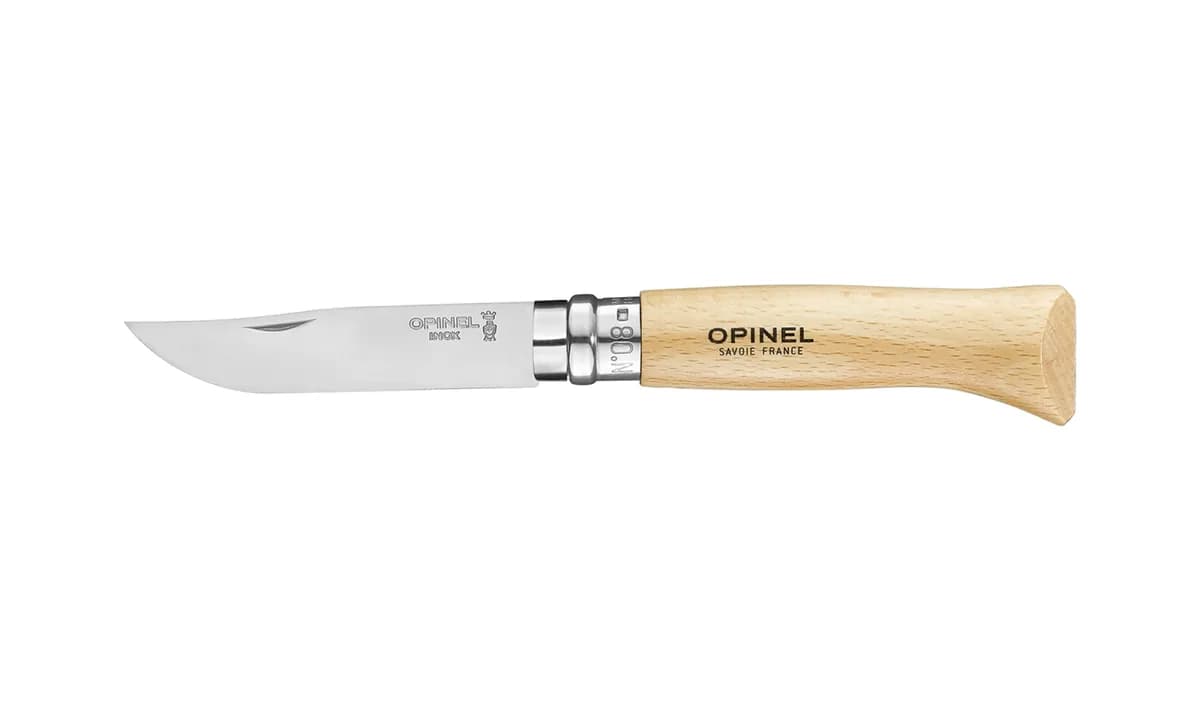
- Plain pocket carry may call for the smaller No. 8: a bushcraft owner who loves their No. 10 suggests the No. 8 if you only want a pocket knife, and another owner posting their everyday carry is thinking of downgrading from the No. 10 to the No. 8.
- There is no clip or one-hand opening: one owner who carries a modded No. 10 plans to add a pocket clip themselves, and a fan of the brand concedes Opinels lack the clip and one-handed opening of modern folders.
The No. 10 turns up in very different kits: a bushcraft pack where it handles cooking, eating and mushroom foraging, a chef's daily commuting bag, and a tree worker's everyday carry. Its 3.94 in Sandvik 12C27 blade at 2.54 oz is the longest blade among the traditional pocket knives here, and that bushcraft owner says their Victorinox is too small for cooking and their puukko too big.
One new owner's No. 10 would not open because the beech handle had swollen with damp, and the advice was linseed oil or beeswax as a barrier while warning that nothing fully waterproofs it. The same simple construction makes it a knife people modify, with resin and stag handles, a reground cleaver, and one owner planning to add a pocket clip because it has none.
Against a Case Sodbuster, one owner and another knife user both side with the Opinel. Knife users looking at one bushcraft kit called it redundant beside a Swiss Army knife, though its owner answered that it covers cooking the Victorinox is too small for. For plain pocket carry, a bushcraft owner points toward the No. 8, and another owner is considering that switch.
My new Opinel No. 10 will not open. What do I do?
The beech handle swells with moisture, which is what one new owner ran into; they concluded the wood was damp and planned to let it dry. The suggestions were to work the joint (even with pliers the first few times) and treating the handle with linseed oil or beeswax, while noting that neither makes it fully waterproof.
Should I get the No. 10 or the No. 8?
A bushcraft owner finds the No. 10 the right size for cooking, eating and foraging but suggests the No. 8 if you only want a pocket knife. Another owner, posting their everyday carry, is thinking of downgrading from the No. 10 to the No. 8.
Is a No. 10 redundant if I already carry a Swiss Army knife?
Knife users looking at one bushcraft kit thought so. Its owner disagreed, saying they use the Opinel for cooking because their Victorinox is too small and their puukko too big for the job.
Opinel No. 10 or Case Sodbuster?
One owner who carried only Case knives for years says they are really fond of their first No. 10. Another knife user who would choose neither for its own use still picked the Opinel over the Sodbuster and singled out the No. 10 as a strong pick in the range.
Stainless or carbon for the No. 10?
The No. 10 listed here is Sandvik 12C27 stainless. A bushcraft owner who used stainless Opinels before moved to a carbon No. 10 and likes it more, partly for its looks. Carbon needs care: another owner wants a more even patina because their carbon No. 10 stains in odd shapes, and one who left theirs in malt vinegar for about a day was told that the result was rust, to be cleaned off with steel wool or fine sandpaper and then oiled.
Features
- Virobloc Collar lock
- Full Flat grind
- Made in France
- Stainless blade
Compare the 10
Related knives
More from Opinel →