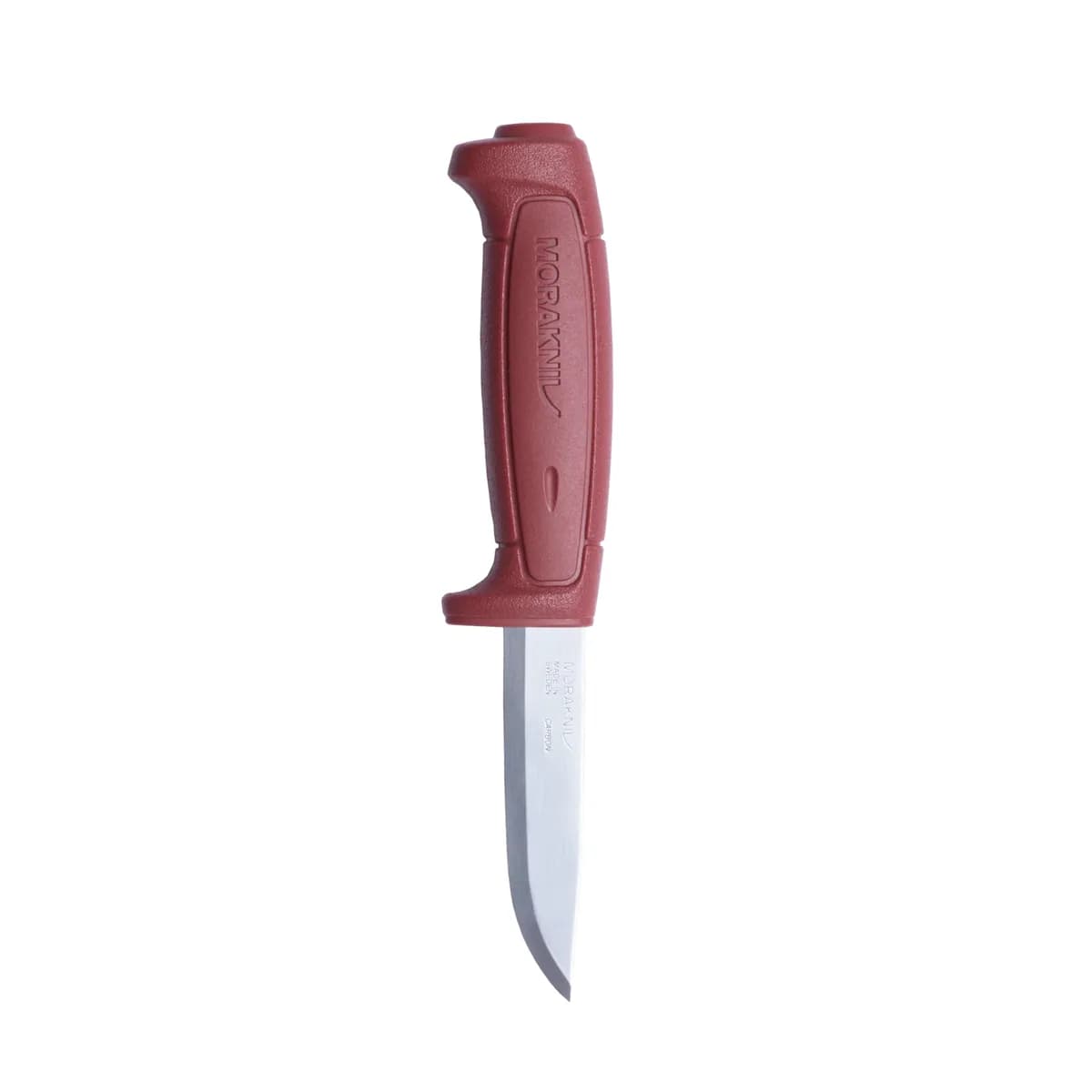
- Morakniv Basic 511 · Drop Point3.58″ blade · 0.079″ spine · 3.86 oz · ~0.89″ tall
Morakniv Basic 511
The Morakniv Basic 511 is a 3.58" drop point fixed blade in High Carbon, scandi ground. The handle is Polypropylene. It is the only knife here in High Carbon, so there is little to compare it against on steel alone.
- Blade
- 3.58″
- Weight
- 3.86 oz
- Steel
- C100S Carbon
- Price band
- Budget
Camp cutting and light carving
We may earn a commission. Price and availability on Amazon’s site may differ.
Specifications
Manufacturer-published figures, cross-checked against morakniv.com, knifecenter.
- Blade length
- 3.58″
- Spine thickness
- 0.079″
- Blade shape
- Drop Point
- Grind
- Scandi
- Steel
- C100S Carbon
- Overall length
- 8.11″
- Weight
- 3.86 oz
- Lock
- Fixed
- Handle material
- Polypropylene
- Country of origin
- Sweden
Why a drop point
The default hunting and EDC shape, and the safest general answer. The spine curves down to the tip in a convex line, which keeps the point low and strong and leaves plenty of belly for skinning. It is hard to make a drop point bad at anything.
Every drop point here →About C100S Carbon
The carbon steel Morakniv uses in the Garberg and Bushcraft lines. Tough enough to baton and easy to bring back with a stone in the field, at the cost of rusting if neglected. The black coating on the blade is corrosion protection, not decoration.
1-5 is a relative ranking drawn from published composition and hardness, not a lab measurement. Higher is better on every axis, and no steel is a 5 across the board — edge retention and toughness pull against each other. All C100S Carbon knives
What owners say
Drawn from 65 owner discussions of the Morakniv Basic 511 since 2024. The opinions are theirs. The specifications above come from the maker.
What owners like
- It costs next to nothing: one buyer paid $8 in 2024, two others paid $10 and $12 at Walmart, one owner says it sells for about 4.50 euros locally, and three owners received theirs free as a gift with a knife order.
- Owners abuse it for years: one calls the 511 bought four or five years earlier their most abused knife and a champ, and another retired theirs after four years as a day-one bushcraft purchase, with the knife moving to the car kit rather than the bin.
- It earns a place as a work knife: one electrician says it replaced the utility blade and earned a permanent spot in the tool belt, an owner who raises poultry uses it mainly for butchering the 50-plus birds processed each year, and another owner keeps one as a box and tape knife.
- The thin scandi edge carves well: one owner says a 511 carves wood way better than a Cold Steel SRK Compact when both are new, though a thinned, convexed SRKC later out-carved it, and an owner of several 511s saves the Moras for dedicated wood carving.
- The 3.58 in blade suits fine work: one owner who tried both chose the 511 over the Companion because the shorter blade was more useful for feather sticks, fire steel work and food prep.
- It takes modifications cheaply: one owner trimmed and melted off the finger guard and forced a vinegar patina for about $10 and an hour of work, and another modded a Walmart 511 into a knife they like as much as a $50 Mora Bushcraft.
What owners flag
- The high-carbon blade rusts, pits and spots without care: one owner's box knife is pitted from neglect, the retired four-year 511 had light rust spots and a sawlike edge before a regrind, and another owner found black spots forming after a month in its sheath, judged to be patina rather than rust.
- The stock sheath is the most common complaint: one owner calls it hot garbage, a rope-access worker found the retention unusable on work pants, an owner of several would not trust it on a belt, and one owner prefers a rival knife as a work blade because of its sheath.
- The finger guard gets in the way for some: one owner hated it enough to cut and melt it away for more precise cutting.
- It is bare-bones next to rivals: one owner found a near-identical Hultafors Craftsman adds a lanyard hole and a spine that throws sparks from a ferro rod, and the owner who retired a 511 describes its handle as plastic next to the rubberized Companion.
Butchering poultry, cutting tape at work and feathering sticks are the jobs owners give the Basic 511. It is a 3.58 in scandi blade in high-carbon steel on a polypropylene handle, and owners describe paying $8 to $12 for it or receiving it free with a larger order, then abusing it for years: one electrician says it replaced the utility blade on the tool belt.
Owners rate the thin scandi edge highly for carving, one owner prefers the short blade for fine work, and some modify the knife by removing the finger guard or forcing a patina. The carbon steel spots and pits if neglected, and the sheath is the main frustration: two owners find the retention too weak for belt carry, though one owner says pressing until it clicks fixed the problem.
The Companion is the knife owners weigh it against, and one owner who tried both chose the 511 for its shorter blade. One owner retiring a 511 after four years is leaning toward a stainless Garberg, with a Bushcraft Black also suggested, while another owner who modified one rates it on par with a Mora Bushcraft.
How do I keep a carbon 511 from rusting?
Owners force a patina with vinegar, with one doing a 15-minute vinegar soak after regrinding the edge, and then oiling the blade. For tape residue on a box-cutting 511, isopropyl alcohol and a microfiber cloth followed by mineral oil, or Ballistol, are the suggestions. One owner found dark spots after a month in the sheath that would not scrub off and concluded they were patina rather than rust.
Why does my 511 keep falling out of its sheath?
One owner who thought the retention was bad found the knife had not been pressed in hard enough to hear the click, and it loosened to normal after that. Others secure it with a ranger band cut from inner tube or an elastic and capstan knot, and one owner made a leather sheath. A rope-access worker still does not trust it on rope with a leg bent at 90 degrees, and an owner of several 511s would not trust the stock sheath on a belt.
Should I get the 511 or the Companion?
One owner who tried both picked the 511 for its shorter blade, found better for fine work like feather sticks, fire steel use and food prep, though the finger guard got cut off. The same owner describes the 511's handle as plastic next to the Companion's rubberized one.
Is it worth modifying a 511?
Two owners who have done it say yes for the price. One trimmed and melted off the finger guard and patinated the blade for about $10 and an hour of work, and another modded a $10 Walmart 511 into a knife they like as much as a $50 Mora Bushcraft.
Features
- Full fixed tang
- Scandi grind
- Made in Sweden
- Carbon steel blade — will patina
Compare the 511
Related knives
More from Morakniv →
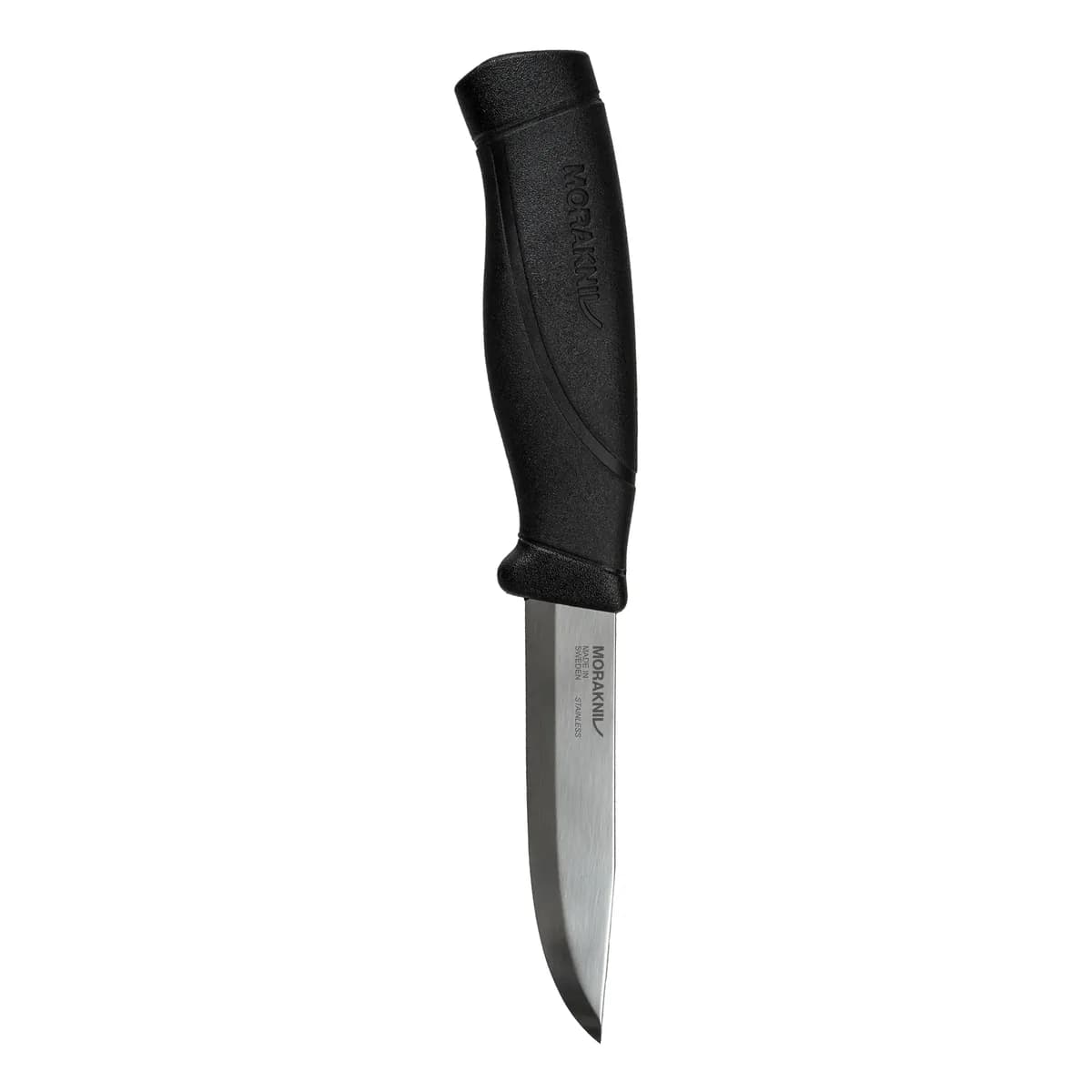
Morakniv Companion Heavy Duty
- Blade
- 4.1″
- Weight
- 4.77 oz