- ESEE-6 · Drop Point6.5″ blade · 0.188″ spine · 12 oz · 1.56″ tall (published)
ESEE-6
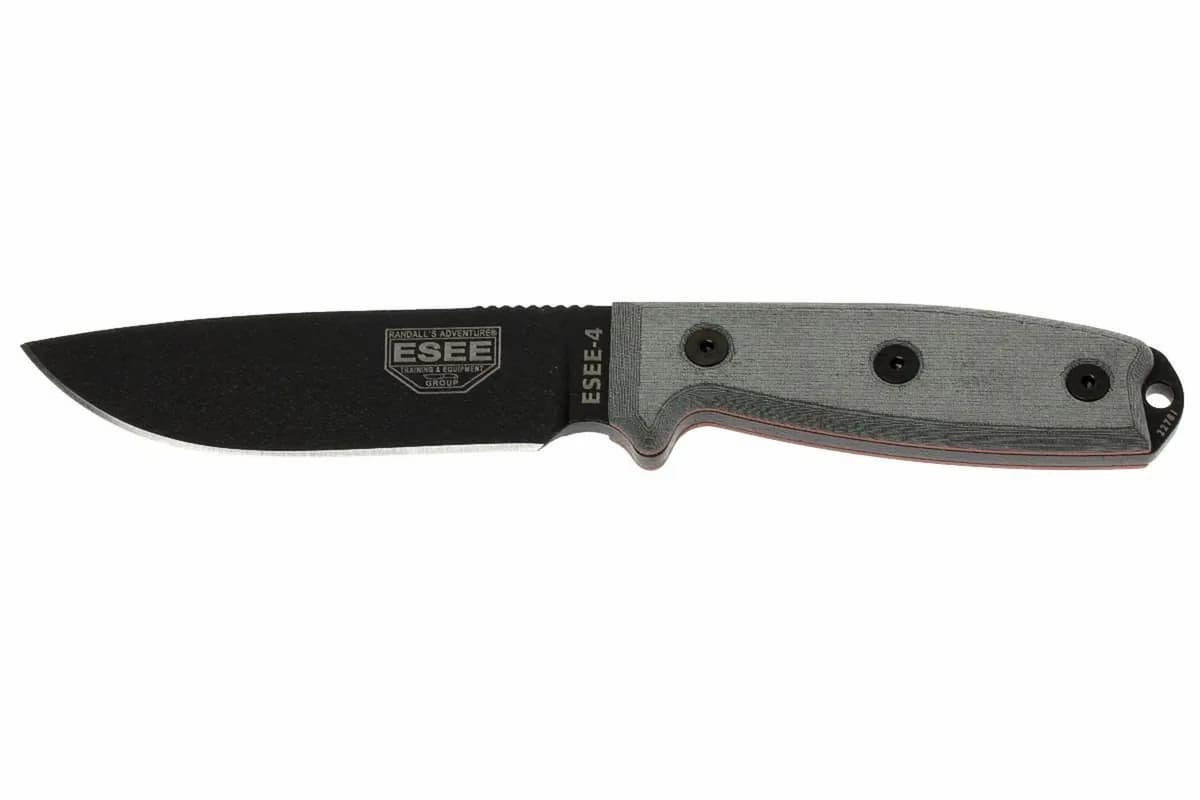
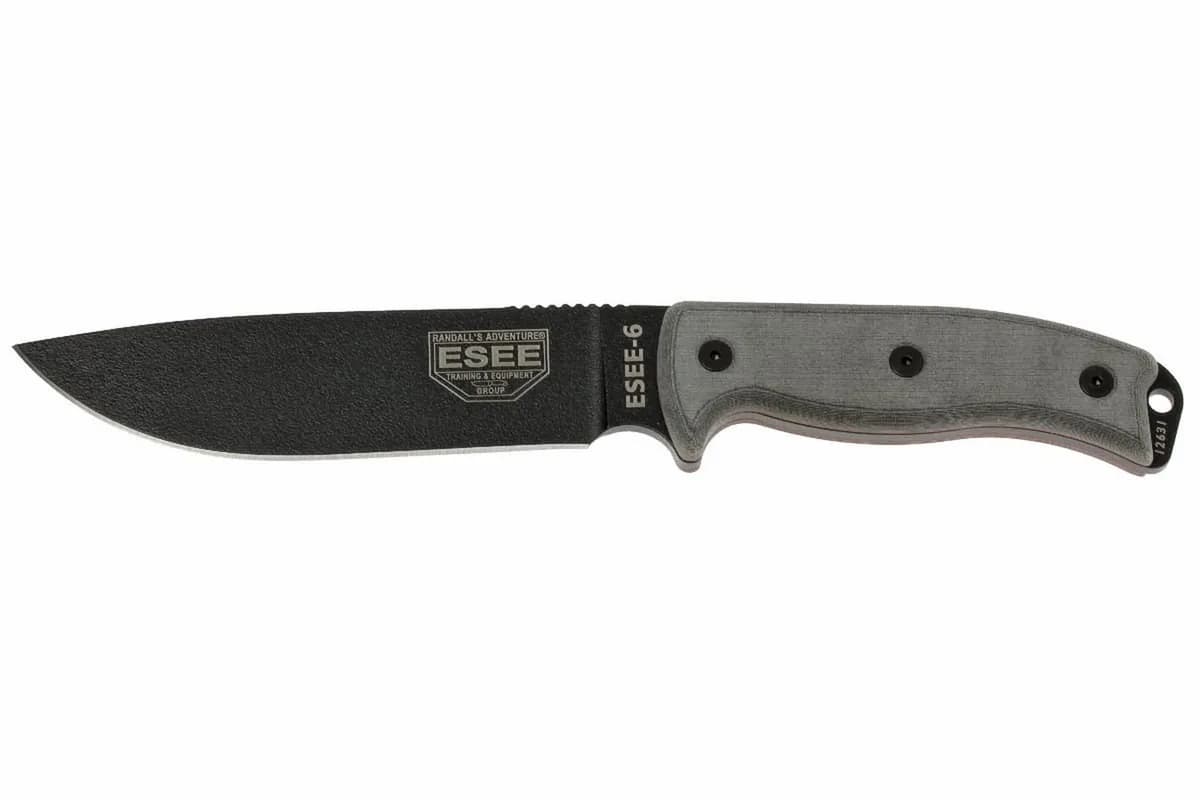
The ESEE-6 is a 6.5" drop point fixed blade in 1095 Carbon, full flat ground. The handle is Linen Micarta. Blade is 55% of its 11.75" overall length — unusually little handle for the reach it gives.
- Blade
- 6.5″
- Weight
- 12 oz
- Steel
- 1095 Carbon
- Price band
- Premium
Batoning, carving and fire prep
We don’t have a verified retailer link for this knife yet. We only link products we have confirmed resolve to the right item — here’s why.
Specifications
Manufacturer-published figures, cross-checked against eseeknives.com.
- Blade length
- 6.5″
- Cutting edge
- 5.75″
- Spine thickness
- 0.188″
- Blade shape
- Drop Point
- Grind
- Full Flat
- Steel
- 1095 Carbon
- Overall length
- 11.75″
- Weight
- 12 oz
- Lock
- Fixed
- Handle material
- Linen Micarta
- Country of origin
- USA
Why a drop point
The default hunting and EDC shape, and the safest general answer. The spine curves down to the tip in a convex line, which keeps the point low and strong and leaves plenty of belly for skinning. It is hard to make a drop point bad at anything.
Every drop point here →About 1095 Carbon
The American survival-knife standard. Dead simple, very tough at these hardnesses, and it will start rusting the day you put it away wet.
1-5 is a relative ranking drawn from published composition and hardness, not a lab measurement. Higher is better on every axis, and no steel is a 5 across the board — edge retention and toughness pull against each other. All 1095 Carbon knives
What owners say
Drawn from 111 owner discussions of the ESEE-6 since 2024. The opinions are theirs. The specifications above come from the maker.
What owners like
- Years of hard use without failure: one owner's six-year review covers levering, chopping, skinning rabbits and camping from -15 to +40 C and calls it the most durable knife they have had, another's has beaten through countless trees and made mountains of kindling, and a third replaced theirs with a smaller blade only after many years in which it never failed.
- Small batoning is what it does best: one owner says they have done tons of it, another chops and splits branches under 2 in and makes feather sticks with theirs, and another felled small trees with it on survival courses.
- Owners of both prefer it to the ESEE-5: one calls the 5 a sharpened pry bar and the 6 far more usable, others point to the thinner stock and full flat grind, and one finds the 6 easier to baton with even though the 5 is the thicker knife.
- The flat grind slices better than its size suggests: one owner of several ESEEs calls it an efficient slicer next to the 5, finds it easy to keep really sharp, and uses it for outdoor food prep after stripping the coating.
- Value comes up again and again: the six-year owner calls it the best value for money they have had and plans to buy the same knife when it breaks, and another owner says it is hard to imagine better value at the price.
- The warranty backs it: ESEE is described as replacing a knife broken for any reason, by anyone, one owner who took it on survival courses calls the warranty killer, and the six-year owner's flattened tip may be enough to earn a new knife.
What owners flag
- At 12 oz it is heavy to carry: the six-year owner calls it heavy for long treks and too heavy for everyday carry, one backpacker found it too big after four years and moved to a smaller TOPS, and another owner takes the ESEE-3 instead when weight matters.
- Rust still finds the 1095: the six-year owner has had rust on the blade several times and always on the uncoated white logo and serial markings, another owner sees edge rust by morning if it is put away wet, and a heavily used one shows some rust alongside a finish worn through in places.
- The finish and tip wear with abuse: one owner's tip is flattened over its first half millimeter, the coating is gone from the spine where it was struck with logs, and the texture near the edge has worn smooth.
- It is not a slicer for everyone: one owner who has run five ESEE models finds ESEEs too thick and not slicey enough, and says the 5 cuts better than the 6 once both edges are convexed.
- The flat stock handle is less comfortable than the contoured option: one owner of both the 5 and 6 calls the square handle not as good, and another who prefers the 6 picks it with the contoured scales.
- Counterfeits are out there: one buyer paid $80 at a gun show for an uncoated ESEE-6 that turned out fake. The giveaways were an uncoated finish one owner had never seen on a genuine 6, a misspelled web address on the box and engraving that repeated a word.
A 6.5 in blade of 3/16 in 1095 lets the ESEE-6 chop branches, split kindling and handle small batoning, the job one owner says it is best suited to. One owner's six-year review covers levering, skinning rabbits and camping from -15 to +40 C without a failure, another's has been through snow, rain and countless trees, and one owner used it on survival courses to fell small trees.
Twelve ounces is the price of that. The six-year owner finds it heavy for long treks, one backpacker found it too big after four years and switched to a smaller TOPS, and an owner of several ESEEs takes the ESEE-3 when weight matters. The coating protects most of the 1095, but owners still report rust on the edge and the uncoated logo markings, and on one knife hard use wore the coating off the spine and flattened the tip. The flat grind slices well for a knife this thick, though one owner of five ESEEs still finds the range too thick and has convexed the edges.
The ESEE-5 is the comparison owners settle most firmly: people who have used both call the 5 a sharpened pry bar and keep using the 6. Buyers also weigh the Cold Steel SRK in 3V, the Fallkniven A1 Pro and Architect knives built on ESEE handles. Owners keep returning to the warranty and the price, and one counterfeit bought at a gun show means buying from a known dealer matters.
ESEE-6 or ESEE-5?
Owners of both mostly pick the 6. The 5 is 1/4 in thick and one owner calls it a sharpened pry bar, while the 6 shares the 3/16 in stock of the ESEE-4 and has a full flat grind. One owner even finds the 6 easier to baton with and keeps the 5 for hammering.
Will the 1095 rust?
The coating covers most of the blade, so rust mostly shows on the edge and on the white logo and serial markings. One owner sees edge rust by morning if it is put away wet and strops it off, and another says a few passes on a strop always clears it. An owner who stripped the coating keeps the bare blade oiled and finds it rusts little.
Is it too heavy for backpacking?
Opinions split. A six-year owner calls it heavy for long treks, one backpacker found it too big after four years and moved to a smaller TOPS, and another owner reaches for the ESEE-3 when weight really matters but otherwise does not find the weight of the 6 objectionable for a knife of 3/16 in stock.
Contoured scales or the standard handle?
Two owners favor the contoured handle. One with both the 5 and 6 says the square stock handle is not as good, and another prefers the 6 with the contoured handles specifically. Knife Connection (TKC) aftermarket scales are one upgrade owners fit to the flat-handled ones.
How do I avoid a fake ESEE-6?
One buyer paid $80 at a gun show for an uncoated ESEE-6 that was counterfeit. One owner had never seen a genuine uncoated 6, the box misspelled the web address and the engraving repeated a word. The seller took it back; buying from an established dealer avoids the problem.
Features
- Full fixed tang
- Full Flat grind
- Made in USA
- Carbon steel blade — will patina
Compare the ESEE-6
Related knives
More from ESEE →