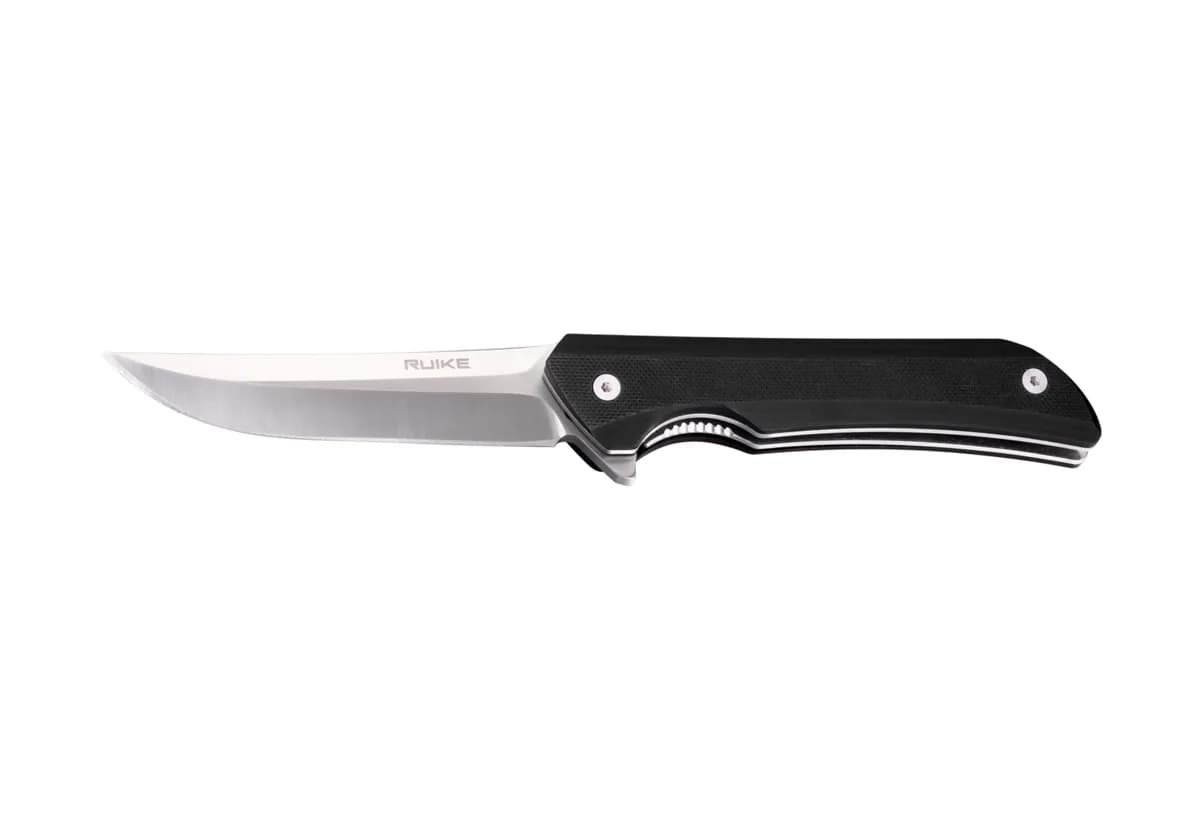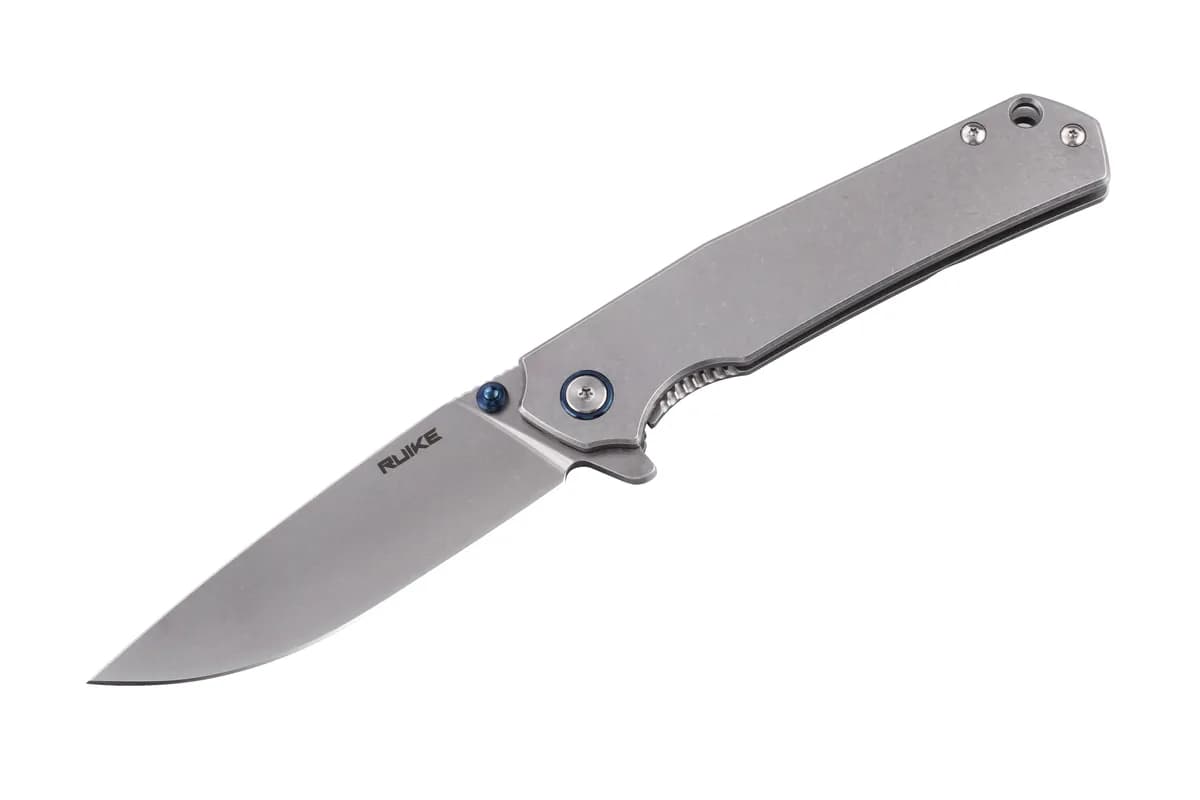
- Ruike P801 · Drop Point3.39″ blade · 0.12″ spine · 4.23 oz · ~0.88″ tall
Ruike P801
DiscontinuedRuike no longer makes this knife in this configuration. See Ruike’s current knives.
The Ruike P801 is a 3.39" drop point folder in Sandvik 14C28N, flat ground. The handle is 3Cr14N Stainless, secured by a frame lock. At 4.23 oz it sits 50th-lightest of the 61 EDC folders here, where the median is 3.2 oz.
- Blade
- 3.39″
- Weight
- 4.23 oz
- Steel
- Sandvik 14C28N
- Price band
- Budget
Everyday carry and general utility
We don’t have a verified retailer link for this knife yet. We only link products we have confirmed resolve to the right item — here’s why.
Specifications
Manufacturer-published figures, cross-checked against ruikeknives.com, knifecenter.
- Blade length
- 3.39″
- Spine thickness
- 0.12″
- Blade shape
- Drop Point
- Grind
- Flat
- Steel
- Sandvik 14C28N
- Overall length
- 7.87″
- Closed length
- 4.49″
- Weight
- 4.23 oz
- Lock
- Frame Lock
- Deployment
- Flipper
- Handle material
- 3Cr14N Stainless
- Country of origin
- China
Why a drop point
The default hunting and EDC shape, and the safest general answer. The spine curves down to the tip in a convex line, which keeps the point low and strong and leaves plenty of belly for skinning. It is hard to make a drop point bad at anything.
Every drop point here →About Sandvik 14C28N
Developed with Kershaw. Tough, rust-resistant, and about as easy to sharpen as a good steel gets — the reason it dominates the value tier.
1-5 is a relative ranking drawn from published composition and hardness, not a lab measurement. Higher is better on every axis, and no steel is a 5 across the board — edge retention and toughness pull against each other. All Sandvik 14C28N knives
What owners say
Drawn from 56 owner discussions of the Ruike P801 since 2024. The opinions are theirs. The specifications above come from the maker.
What owners like
- Ruike's 14C28N gets real praise: one owner calls it stupid sharp and quick to bring back after a beating, another says it sharpens like a dream, a third calls the heat treat top notch and a fourth calls it great.
- Feels like more money than it costs. A 2026 buyer who paid $35 was impressed by how premium it feels, another owner says the feel in hand and action are well above the price, and a third says it beats knives that cost twice as much.
- Holds up for years of work: one owner has used theirs as a work knife for three years, another's garage beater has held up for several years, and a third paid $29 and says it has held up really well.
- Carries flat with a wide blade. One owner likes that it sits flat in the pocket while giving a really wide blade, and another user finds it thin and comfortable in the hand.
- Takes well to engraving and parts swaps: owners have had deep scroll work, a beskar ingot design and a custom motto engraved on theirs, and one moved the black blade and parts onto a satin frame.
- Still earning carry time after going on a decade on sale: owners call it a classic, one calls it their all-time favorite budget blade, and another says it is the knife that got them into the hobby.
What owners flag
- Quality control can miss: one first-time owner's P801-SF opened far too easily and had ruined pockets, a backpack and fingertips, and the owner found the detent ball had been missing since unpacking. Other owners say theirs have a strong detent and no play.
- Screws work loose for one owner, who has used theirs for three years but has to tighten them every month or two before it gets floppy.
- Heavy for its size, as one owner who has bought two puts it, putting that down to it being a frame lock; the specs list 4.23 oz.
- The stainless steel handle is slick, one user warns when comparing it with the Petrified Fish PF838.
- Thumb studs fight back during mods: two owners who swapped parts between colorways could not get one of the studs off.
- Detent feels a bit stiff out of the box, one owner notes, though it breaks in.
Owners report paying $29 to $35, and for that they get 14C28N, a stainless steel frame lock and a flipper in a plain drop point that one owner describes as having class without over-design. It is carried as a daily work knife, a garage beater and a base for engraving, and at least three owners have bought both the satin and black stonewashed versions.
One owner has used theirs as a work knife for three years: the steel takes and keeps a sharp edge, the action is smooth, and the main maintenance they mention is snugging the screws every month or two. The worst failure here is unit-level: one P801-SF whose detent ball was missing from the factory, so the blade opened far too easily, while other owners said theirs were firm. One owner calls it heavy and another user warns it is slick in hand.
Newcomers weigh it against the Petrified Fish PF838, Civivi Mini Praxis, QSP Parrot and SRM 9202 at the same budget. Owners who have had one for years argue it still holds its own against newer budget knives, and one who likes the flipper tab and all-metal build asked for something similar in a better blade steel for under $75.
My P801 flips open on its own or creeps out of my pocket. Is that normal?
No. One first-time owner with this problem found the detent ball had been missing since unpacking. One owner could not flick theirs open even with all their weight on it, and another says their detent is quite strong. They suggested tightening the pivot, and contacting the seller for a replacement if a tight blade still creeps open.
How good is the 14C28N on the P801?
Owners rate it highly. One says it gets stupid sharp, takes a beating and sharpens right back up, another says it sharpens like a dream, a third says it stays sharp a very long time, and others call the heat treat top notch and great.
Should I get the Ruike P801 or the Petrified Fish PF838?
One P801 owner with no experience of the PF838 likes that it carries flat with a really wide blade. Another user says the P801 is great for the price and the 14C28N performs well, but warns it is slick.
Is the P801 heavy?
At 4.23 oz with a stainless steel handle, one owner who has bought two calls it quite heavy and puts that down to it being a frame lock. Another user points out a version with a G10 scale on one side that weighs about 3 oz.
Is the P801 still worth buying now that budget knives have improved?
Owners who have carried it for years say yes. One calls it among the best value budget blades for going on a decade, another still rates it their all-time favorite budget knife, and a third says it easily beats knives that cost twice as much.
Can I swap parts between P801 colorways?
Yes, owners have swapped blades, clips and thumb studs between the satin and black versions. Two owners say they could not get thumb studs off, and one lost two T6 screws while their knives sat disassembled, so they could not fully reassemble them until they found more.
Features
- Flipper
- Frame Lock
- Flat grind
- Made in China
- Stainless blade
Related knives
More from Ruike →